

A referring dentist searches your name, not your procedure, at 11pm.
Most endodontist web pages treat a referred dentist and a patient in acute pain as the same visitor, so both land in the wrong place and leave. The real bottleneck is usually one broken path: either the emergency page has no phone number above the fold, or the retreatment page sat in draft for three weeks because nobody agreed who could approve it.
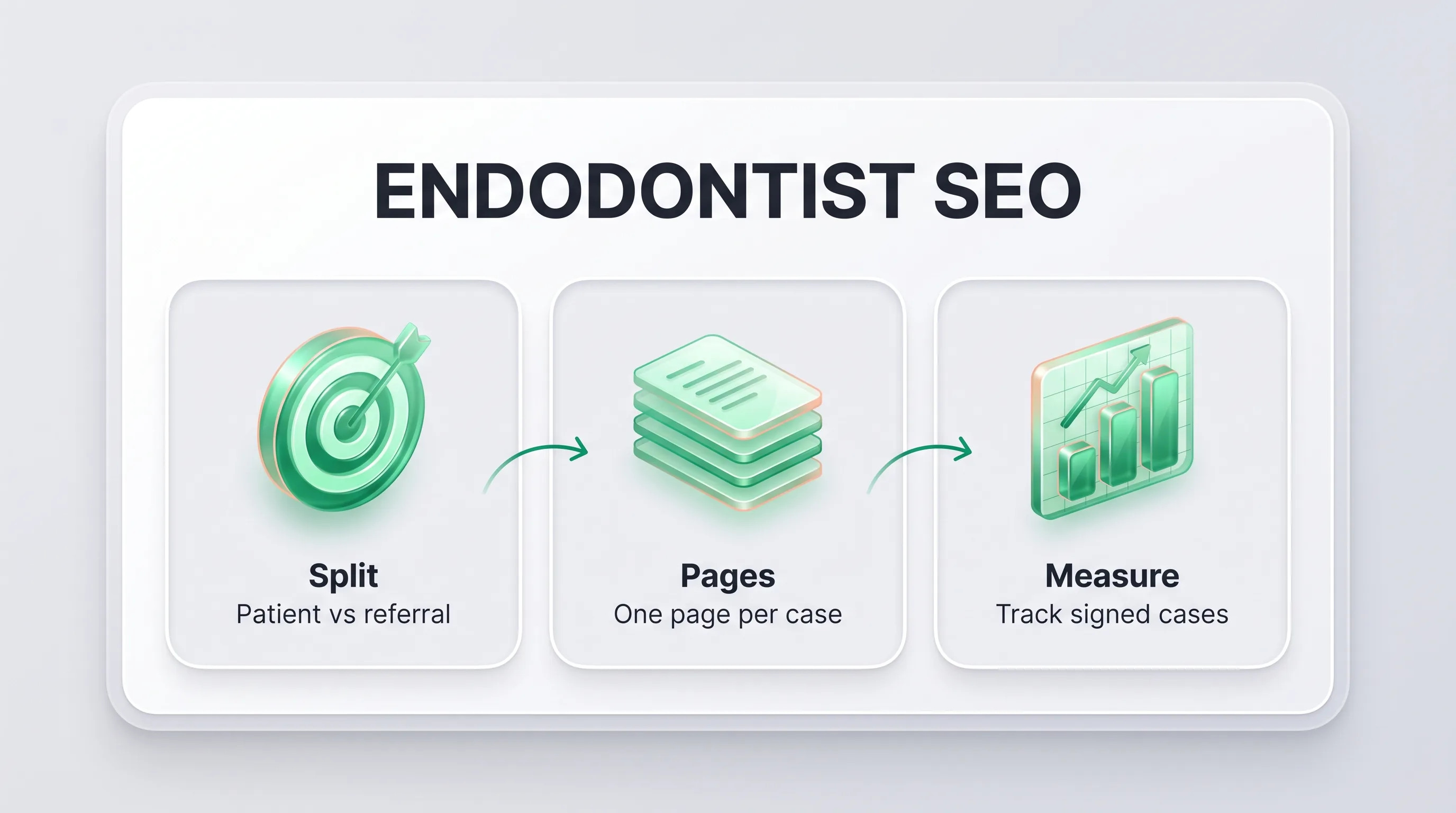
A general dentist's office manager calls between patients on a slow Wednesday afternoon, needing a root canal slot before her patient flies out Friday. She searches your name, not "root canal specialist near me." That one distinction changes your entire page plan. Endodontist SEO services that treat both audiences as identical will build you rankings nobody useful ever clicks. Before you sign anything, map which share of your case volume comes from direct patient searches versus referred cases finding your name for reassurance. The service scope, the pages you need, and what you measure all follow from that split.
Most dental SEO services are built around consumer demand. Specialist practices need a provider who treats the referral relationship as a separate search intent, not an afterthought.
A single-location endodontist competing in a mid-sized market does not need the same scope as a group practice running three operatories across two zip codes. General dental SEO handles brand visibility and basic local rankings well enough for low-competition towns. The moment you need to rank for "apicoectomy specialist" or "endodontic retreatment" alongside a larger hospital-affiliated practice, specialist work earns its cost. The keyword difficulty on those terms is lower than "dentist near me," but the page structure and clinical credibility signals required are entirely different. For a sharper look at how treatment-page architecture drives those rankings, the endodontist SEO strategy guide covers the structural side in detail.
Two practices, same city, same procedure list. One ranks well on maps but loses the click when the treatment page reads like a brochure from 2019. The other has a credible apicoectomy page but barely appears in the local map pack. Both leave cases on the table, for different reasons. Pin the actual gap before the proposal lands. If your organic calls are thin, local map presence is the short-term lever. If calls come in but patients arrive uncertain or unprepared, your treatment pages are the bottleneck. A service that cannot tell you which problem it is solving first is selling a package, not fixing your practice. For the local visibility side, local dental SEO tactics cover map-pack work without overlapping the treatment-page scope here.
Root canal therapy, endodontic retreatment, apicoectomy, and emergency pain each describe a different patient at a different stage. A patient already referred for retreatment searches differently from someone at 11pm with acute pulp pain. These deserve separate, focused pages, not one "services" page that compresses all four into three paragraphs. Overlap creates a different problem: two pages competing for the same term, splitting authority and confusing the index. A good provider audits for that collision on day one and assigns clear targets to each page. For broader treatment-term targeting, the dental SEO keywords framework shows how to assign terms without cannibalizing your own pages.
A patient types "emergency root canal open now" during a Sunday-afternoon flare-up and lands on your homepage. The homepage has a contact form with a two-day response window. She calls the number, gets voicemail, and books with the practice that answered. That is not a conversion problem. That is a page-to-path mismatch your SEO service should catch before month one. Emergency searches need a dedicated page with a click-to-call button above the fold, hours that are current, and a specific next step that does not require her to figure out your booking system under pain. Whether that means a direct call line or a same-day form depends on your operations, but the page must close the gap. This is where your search marketing mix matters: paid search can cover the immediate gap while organic pages build.
This is the delivery risk competitors rarely name. An SEO provider writes a retreatment page. It sits in draft for three weeks because nobody agreed who approves clinical language. Meanwhile, a referring dentist searches your name and finds a thin page with a stock photo. Referral confidence erodes quietly. Assign a named reviewer for clinical content, confirm who holds CMS access, and define turnaround for approvals before the engagement starts. Referral-sensitive updates, like a change to your CBCT protocol or a new specialist joining, need a clear path from your practice to the live page in days, not months. A provider who does not raise this in onboarding has not run a specialist practice before.
Organic traffic climbing while your booked evaluations stay flat is a reporting problem dressed as a result. The metric that matters is accepted treatment, because a patient who calls, books, and then declines after the consult costs you chair time with no revenue. A provider worth hiring connects call tracking to booked appointments and then asks what percentage of those appointments signed. If they cannot see past the click, they are measuring their work, not yours. When you evaluate proposals, ask specifically how they report from search impression through to an accepted case. That question alone filters a large share of general agencies. For context on what a full-service engagement includes beyond endodontic specifics, dental SEO service scope outlines the broader checklist.
Across sources, meaningful organic movement for a specialty practice typically lands somewhere in the 90-to-180-day range after the foundational work is complete, meaning pages indexed, technical issues resolved, and local signals consistent. Competitive urban markets sit toward the longer end. If a provider promises map-pack visibility inside thirty days, they are overpromising or describing paid placement. Expect early wins on low-competition procedure terms like "apicoectomy specialist" before broader terms like "endodontist near me" shift. Set a review at month three against a baseline pulled on day one, not against a vague prior performance. If you are weighing the investment against what the service should cost, the dental SEO cost breakdown gives realistic ranges without the sales layer. For practitioners comparing providers at this stage, choosing a dental SEO company covers the evaluation criteria in full.
The right endodontist SEO service narrows its focus to the cases you want signed, not just the traffic you can count.
We review your pages, search visibility and enquiry path, then show you what to fix first.
.svg)