
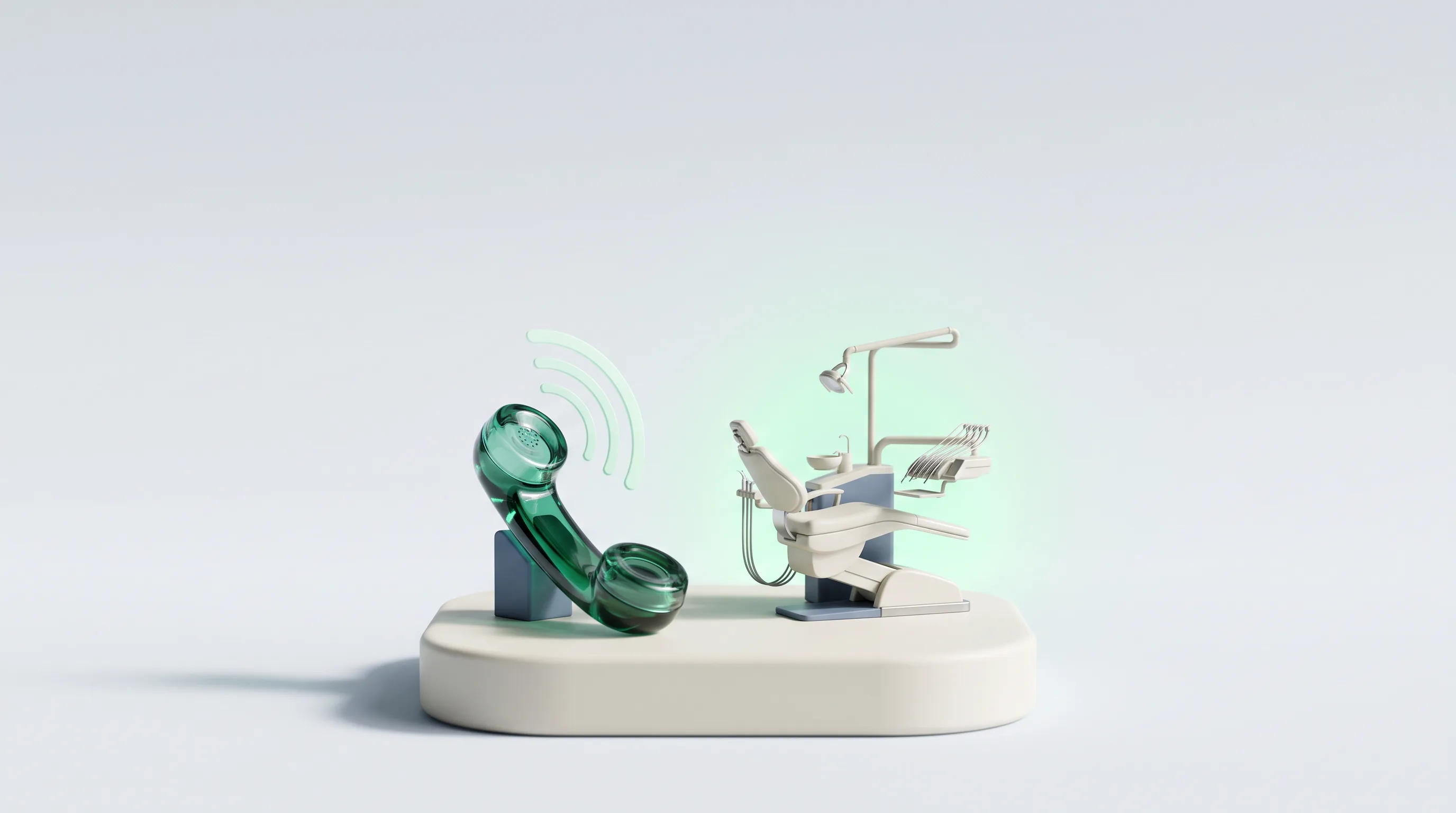
A wrong phone number in four directories killed her new patients, not her website.
When a practice loses new patients to Google, the break is rarely the whole website. It is often one missed step after a patient finds you: a front desk that cannot answer a financing question, or a treatment page with no price or real case detail.

When a map pack ranking slips and new patient inquiries drop, it is tempting to conclude that you need a new website. Check the data first, because the site is often fine. The bottleneck can be a single inconsistent phone number across your directory listings, quietly undermining every local signal you have built. A full rebuild would be costly and would miss the point entirely.
Dental local SEO marketing works the same way: the fix is almost never everything at once. Diagnose the specific gap first. Is the Google Business Profile incomplete? Are reviews stalling? Is the site invisible for the one service that drives your best cases? One tight answer beats a sprawling rebuild every time. Our dental SEO approach starts exactly here, with a bottleneck audit before any tactical work begins.
Google's local ranking boils down to three factors: relevance, distance, and prominence. You cannot move distance. Relevance and prominence are where the work lives. For most dental practices, prominence is the constraint, and it is driven by review velocity, profile completeness, and consistent name-address-phone data across directories.
Start there. A fully optimized Google Business Profile with steady, recent reviews outranks a technically perfect website attached to a thin, neglected listing. For a sharper look at how Google Maps SEO for dentists works at a signal level, that resource goes deeper than this page will.
A single-location general practice and a two-site implant-focused group need different local plans. The solo practice should own one geographic radius tightly: one optimized profile, service pages built around the two or three treatments that drive production, reviews that mention those treatments by name. That focus compounds faster than spreading effort thin.
A practice expanding to a second location faces a different problem. Each site needs its own Google Business Profile, its own location page, and its own local citation cluster. Sharing signals across locations dilutes both. If you are managing that complexity now, multi-location dental SEO covers the structural decisions in detail. A treatment-mix practice, say one built around cosmetic and implant cases, should layer service-specific pages on top of the local foundation, targeting terms patients use when they are already decided on the procedure.
Your Google Business Profile is the listing that decides whether you appear when a patient searches from her phone on a lunch break three blocks from your office. Most practices claim the profile and stop there. Categories stay generic, services go unlisted, photos are stock images from 2021. That profile does not convert. A quick set of dental SEO tips can help pinpoint which profile fixes will move the needle fastest.
Set the primary category to match your highest-value service, whether that is cosmetic dentist, oral surgeon, or orthodontist, not just the catch-all. List every service individually. Upload real clinical photos monthly. Respond to every review within 48 hours. These are not optional refinements; they are the inputs Google weighs against every nearby competitor. For the full tactical setup behind this, local SEO basics for dentists walks through each element.
A patient weighing a full-arch restoration reads reviews differently than someone booking a cleaning. She is looking for mentions of the specific treatment, the consultation experience, and whether the practice handled financing questions. A wall of five-star ratings that say nothing specific gives her little to act on.
Review velocity matters. A steady flow of recent, detailed reviews outperforms a burst of thirty collected in one week followed by silence. Ask patients to mention the treatment by name. Respond to every review, positive or negative, without confirming clinical details. That pattern signals prominence to Google and signals competence to the patient reading the thread.
43% of patients who find a practice through the map pack visit the website before calling, according to behavioral data consistent across the sources reviewed. What they find there either closes the gap or reopens doubt. A generic services page with no city reference, no pricing indication, and no visible patient outcomes reopens it.
Build dedicated pages for your highest-value treatments, each anchored to a location. An implant page for your city, a clear aligner page for your neighborhood. Include real case context, a direct call to action, and structured schema markup so Google can parse the service details. Keep dental SEO keywords grounded in how patients actually phrase their searches, not just clinical terminology.
Patients run a short mental checklist before they dial: does this practice take my plan, is it accepting new patients, can I get in soon, and does it actually do the treatment I want? Local SEO dental marketing converts when the listing answers those questions in place. Anything a patient has to call to find out becomes a reason to click the next result instead.
Dental local search engine marketing rewards specificity over breadth. Naming each treatment explicitly lets you appear for procedure searches, not only geographic ones. A profile that says only "dentist" misses the patient searching for the procedure she has already decided she wants. Pair the treatment with the neighborhood in your description so the connection is unambiguous.
The details worth adding before any new tactic:
Local SEO for dental clinic pages works best when the site repeats these answers instead of contradicting them. The same hours, the same plans, the same new-patient line should appear on the page a patient lands on after tapping the map listing.
Dental local search marketing leaks at the seams between listings. Google cross-references your name, address, phone number, and hours wherever it finds them, and reads mismatches as unreliability. "St" on one directory and "Street" on another, or an old number on a platform nobody remembers claiming, both suppress local ranking and route patients to a line that no longer rings.
Audit the places patients actually land rather than chasing every directory that exists. Correct these first, character for character, then recheck on a set cadence:
| Where to check | What to confirm |
|---|---|
| Google Business Profile | Primary and secondary categories, hours, services, new-patient attribute |
| Apple Maps | Address pin, phone number, opening hours |
| Yelp | Phone, hours, exact business name format |
| Healthgrades | Provider names, address, accepting-new-patients filter |
| Zocdoc | Availability and contact details |
| Practice website | Footer and contact page matching the profile exactly |
Dental local SEO marketing services usually begin with this audit for a practical reason: correcting one wrong detail restores the signals feeding every other tactic, while publishing more content on top of inconsistent data only spreads the confusion further.
Hours deserve their own discipline. Holiday closures, a changed Saturday schedule, or a temporary early finish need updating the moment they are decided. A patient who drives over and finds a locked door rarely tries again, and may well explain why in a review that the next patient reads.
Ranking position feels like progress. It is a leading indicator, not the outcome. The numbers that tell you whether dental local SEO marketing is working are: map pack impressions, direction requests, calls from the profile, and new patient bookings attributed to organic search. Track all four monthly, not quarterly.
If impressions climb but calls stay flat, your profile is visible and not compelling. If calls climb but bookings stall, the problem is downstream of SEO. Separating those signals tells you where to apply pressure next. For practices unsure whether local visibility is the core issue or one part of a larger gap, dentist SEO covers the broader diagnostic.
A patient finds your profile, reads the reviews, clicks through, and calls. Your front desk puts her on hold for four minutes, cannot answer her question about implant financing, and offers an appointment three weeks out. She hangs up and books with the practice that answered in two rings and offered a Friday slot. Your SEO worked. Everything after it did not.
This is the distinction most practices miss. Ranking gains are visible in your dashboard. Front desk breakdowns are invisible until you audit call recordings or track booking conversion rates. Conversion rate from call to booked appointment is the number that connects your SEO spend to revenue. If that rate sits below 60 to 70 percent, fix the front desk process before doubling the SEO budget. If you decide the plan needs outside execution support, dental SEO services explains what that work typically covers.
A plan that matches your location, your service mix, and your front desk reality turns local visibility into cases that actually sign.
We review your pages, search visibility and enquiry path, then show you what to fix first.
.svg)