SEO tips for dentists that fix the biggest leaks first
Start with the service pages most likely to win the next call
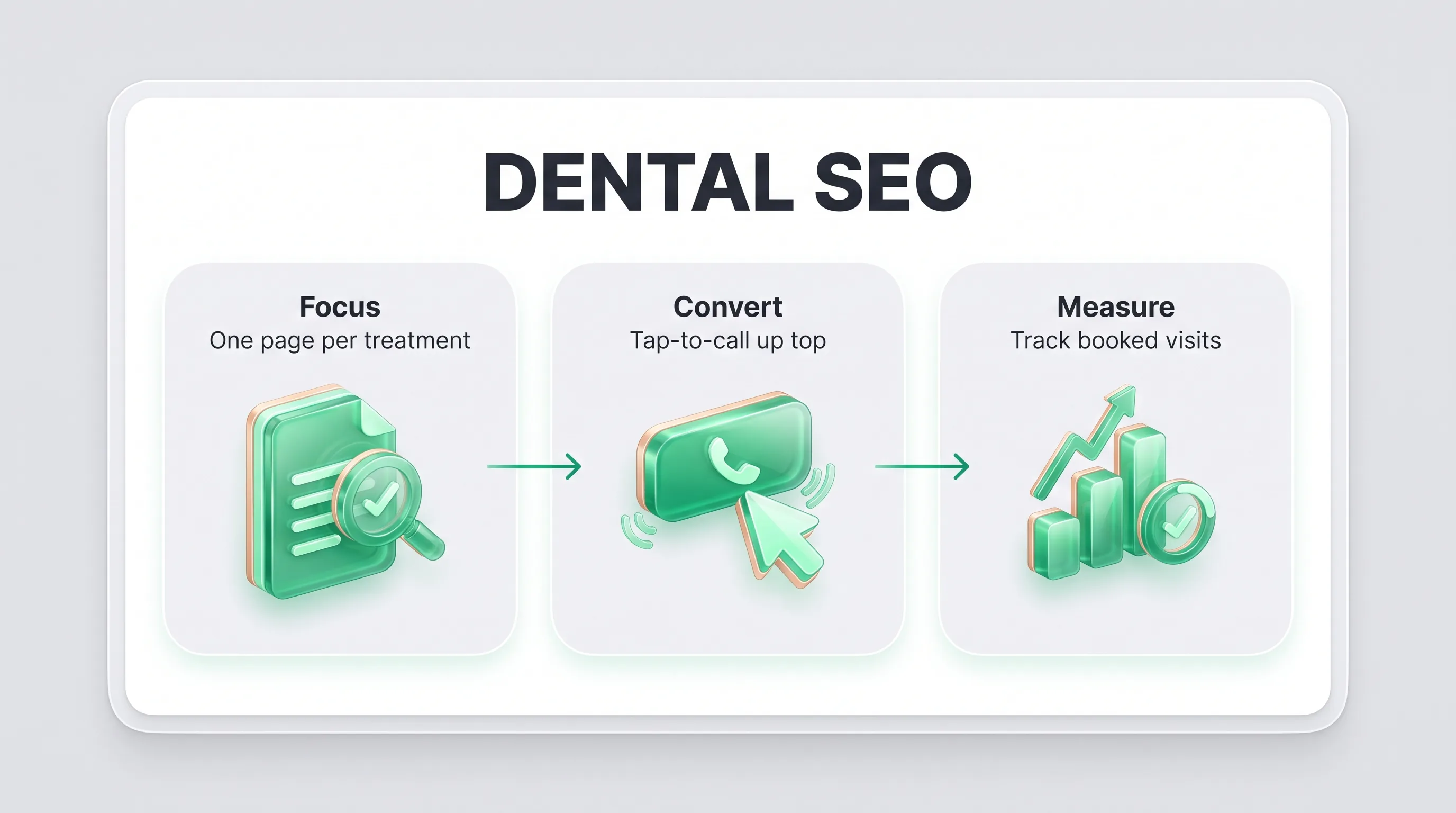
A patient spends two weeks weighing Invisalign, finally searches on a Wednesday evening, and lands on a page that mentions aligners in one paragraph buried under general cosmetic copy. She clicks back inside six seconds. That is not a ranking problem. It is a page problem. The single highest-return move in dental SEO for practices is building one focused page per treatment you want to book. Implants, whitening, clear aligners, and emergency care each deserve their own URL, their own title, and their own patient-facing answer.
Start with the two or three procedures that generate your best treatment revenue. Not every service at once. Depth on a few pages outranks thin coverage across many, and a patient who lands on a page written specifically for her question is far more likely to call.
Tighten titles, headings, and treatment details before you add more pages
Before building anything new, audit what you already have. Most dental sites carry service pages with generic titles like "Our Services" or "Cosmetic Dentistry" and a heading that matches nothing a patient actually types. Your title tag, the text Google displays in search results, should name the treatment and your location plainly. "Dental implants in Bristol" earns a click; "Advanced smile solutions" does not. Choosing the right terms for each page is worth getting right first, and the broader work of building your dental SEO keywords sits behind every page that ranks.
Inside each page, the main heading should match the title, and the body should answer what the procedure involves, who it suits, and what happens at the first appointment. Those three details convert a browser into a caller. Leave them out and the page ranks for nothing useful.
Make every page lead to one clear next step on a phone
60 to 70 percent of local health searches happen on a mobile device. If your service page buries the booking button below three scrolls of copy, or if the phone number is an image that cannot be tapped, you lose the patient at the last moment. Every service page needs one visible action: a tap-to-call button or a short booking form, above the fold on a phone screen. One step. Not two options, not a contact page that requires filling in seven fields.
Protect good traffic from quiet losses
Fix mobile speed, broken paths, and weak booking steps first
A site that loads in under three seconds keeps the patient. One that takes longer sends her back to the search results, usually to the practice listed just below yours. Mobile speed is not a technical nicety; it is the door. Run your pages through Google's PageSpeed tool and act on the top two findings: image compression and render-blocking scripts cover most of the gap on dental sites. For a deeper look at the structural fixes that hold rankings once you earn them, optimizing your dental website's SEO foundations covers the page-experience layer in full.
Broken internal links and outdated booking paths compound the problem silently. A patient who clicks "Book now" and lands on a 404 does not try again. Check your conversion paths quarterly.
Use trust signals that help a patient choose, not just browse
A patient considering a crown or an implant wants evidence before she calls, not after. Credentials, a clear photo of the practitioner, before-and-after cases where regulations allow, and real patient quotes placed near the booking step all reduce the hesitation that kills conversions. When I ran my own clinic, I noticed that adding a short practitioner bio to each service page cut the time between first visit and signed plan. The patient arrived already familiar. That familiarity is what good local visibility reinforces, which is why local dental SEO and review management sit alongside these on-page elements rather than separately from them.
Check for page overlap before two services compete with each other
Two pages targeting the same intent split Google's attention and dilute both. On many dental sites, a "cosmetic dentistry" overview page and an "Invisalign" page carry overlapping titles, identical headings, and near-duplicate introductions. Google cannot confidently rank either. The fix is to clarify the role of each page: the overview names the category and links to treatments; each treatment page goes deep on one procedure and targets its own specific search. Check your pages in Google Search Console by filtering for queries where two URLs share impressions for the same term. If you see it, consolidate or differentiate. Cannibalization between service pages is one of the quietest ranking killers on established dental sites, and fixing it costs nothing except an afternoon of attention.
Know whether the work is filling chairs
Separate the drop at ranking, inquiry, or how quickly your desk answers
Rankings climb, traffic holds, and new patients stay flat. That pattern means the drop is not in SEO: it is in what happens after the click. Rank, click, inquiry, booked appointment, and attended visit are four separate steps, and the leak sits at a different point for every practice. If clicks are strong but inquiries are low, the page is failing. If inquiries come in but appointments do not, the front desk or booking flow is the problem. A broader dental SEO strategy maps these steps explicitly so you know which one to fix rather than doing more of everything at once.
Organic traffic is a vanity number without conversion data beside it. Connect call tracking to your service pages so you know which page drove each call, not just which page received traffic. Add form submission goals in Google Analytics and match them against your booked appointment count each month. The gap between submitted forms and booked visits tells you more about your front-desk process than any ranking report. Understanding the full picture, including what these improvements cost to maintain, is part of evaluating dental SEO cost against real revenue. Track procedure mix too: a surge in hygiene bookings with no implant or restorative growth means your high-value pages still need work.
Fix the pages you have, close the gaps that bleed traffic quietly, and measure outcomes in booked chairs rather than rankings alone.