Dentist SEO that brings in the right patients
Focus first on service pages that match real treatment demand
A patient spends three weeks researching clear aligners before she types anything into Google. When she finally searches, she lands on a page that lists every service you offer in one scrollable block. She leaves in eight seconds. That single-page setup costs you the case before you ever meet her.
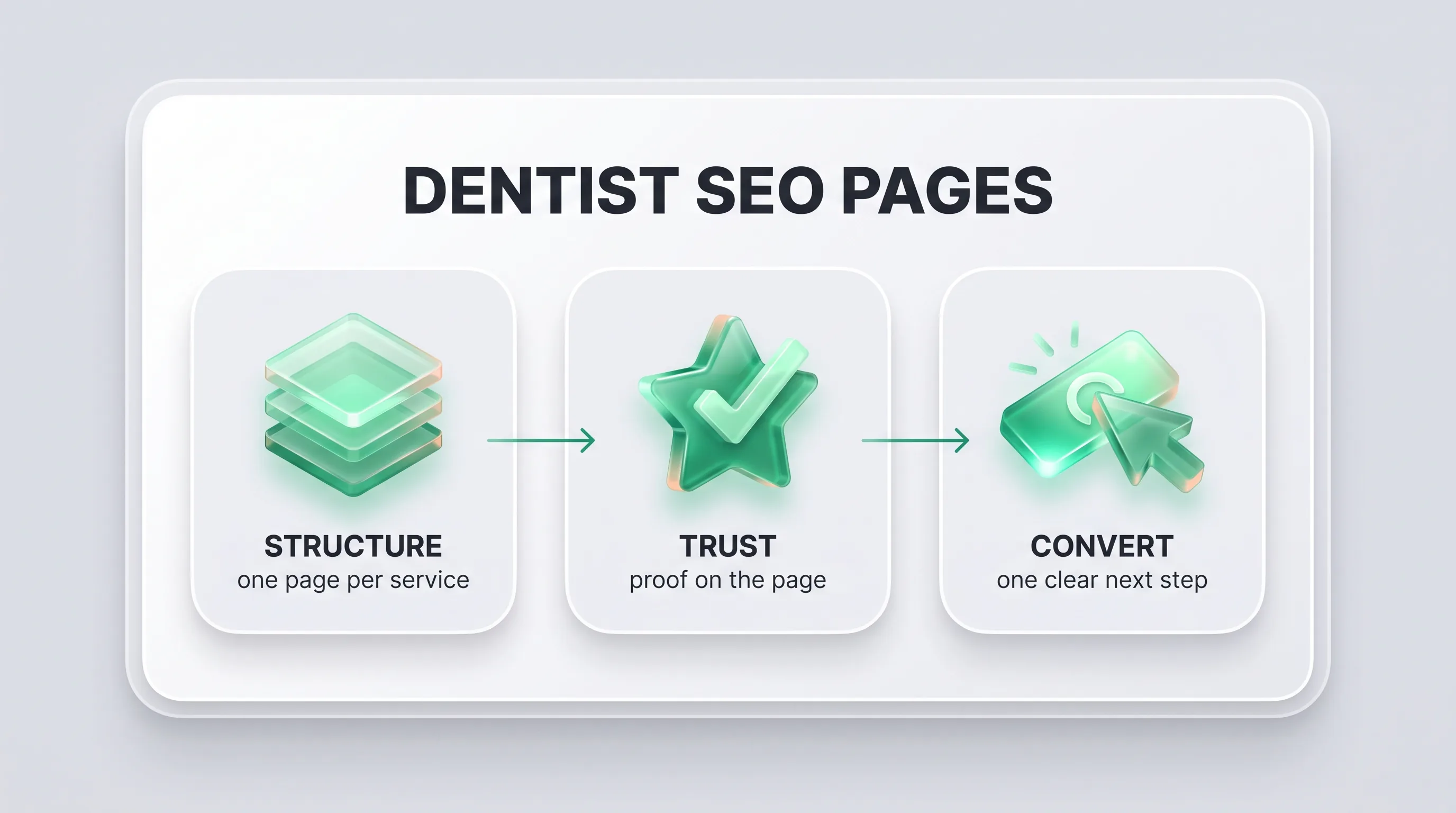
Dedicated service pages, one for each high-value procedure you actually want to fill, are the foundation of dental SEO that converts. Google ranks individual pages, not whole sites. A page built around implants, one around Invisalign, one around veneers: each targets the specific intent behind a different search and gives that patient exactly the evidence she needs to keep reading. Practices with a pediatric focus need a dedicated approach to pediatric dentist SEO that speaks directly to parents choosing a first dentist.
The right dental SEO keywords on each page matter, but structure comes first. One procedure, one page, one clear next step.
Make each page earn the next step, not just a visit
Traffic without action is a vanity metric. A practice can hold solid organic rankings for cosmetic consultations and still see flat calls. When that happens, look at the pages themselves: no fee range, no before-and-after context, and the booking button buried below a wall of clinical text. Rankings can be fine while the page does nothing with the visit.
Every service page needs three things in the first screen: what the treatment resolves, what a patient should expect, and a single obvious way to act. Friction compounds. Each extra click, each unanswered cost question, each missing photo bleeds potential patients. On mobile, where more than 70% of local dental searches happen, a buried phone number is a closed door.
Write the way patients speak, not the way a chart reads. Answer the question they are actually holding: does this hurt, how long does it take, is it worth what it costs? Answer those before they have to ask.
Fix weak trust signals before you chase more traffic
More traffic to a page that does not earn belief just accelerates the bounce. Practitioners feel this quickly: rankings improve, impressions climb, calls stay flat. The bottleneck is not visibility, it is credibility on the page itself.
Trust on a service page is specific: a photo of your actual clinic, a review tied to that treatment, a real name behind the credentials listed. Generic stock photography and a wall of bullet points signal a template. Patients weighing a treatment worth several thousand dollars notice. A dentist SEO case study we ran showed that adding treatment-specific reviews and a practitioner photo above the fold cut bounce rate meaningfully on high-value pages, without touching a single ranking factor.
Audit your core service pages before your next link-building effort. If the page would not convince a skeptical patient who already found you, sending more traffic to it wastes the work that got them there. For further practical dental SEO tips on converting existing traffic, review each page against real patient objections before expanding the campaign.
What separates steady growth from stalled rankings
When local visibility is the bottleneck and when it is not
Not every stalled practice has a local SEO problem. Some have strong map pack presence and still miss the inquiry because the website fails after the click. Others rank well organically but invisible on maps for the searches that actually drive calls. Diagnosing which is which saves months of effort pointed in the wrong direction.
Local visibility, meaning how you appear in proximity-based searches, is covered in depth on local SEO for dentists. The short version: if your phone shows you below the fold in the map section for your own suburb, that is the first problem to solve. If you already appear there and calls are still thin, the website is the constraint, not the listing.
How long should results take when the basics are in place?
Practitioners ask this every time, and the honest answer sits in a range. With solid technical foundations, dedicated service pages, and consistent effort, most practices see rankings start to move well inside the first half-year. Twelve months typically brings stable organic visibility that compounds rather than fluctuates.
Paid search delivers faster signals, but organic builds an asset. A well-ranking implants page does not stop working when you pause a budget. That compounding quality is why the timeline question matters: short-term expectations applied to a long-cycle channel produce frustration, cancelled retainers, and restarted projects that never reach the payoff period.
A useful framing for your own planning: think about a broader dental SEO strategy that pairs organic investment with near-term conversion levers, so the practice is not waiting on rankings alone.
Why reporting should connect rankings, calls, and booked patients
A ranking report that stops at position numbers tells you almost nothing about practice growth. Position 3 for an implant query is worthless if the page produces zero calls. Position 8 for a high-intent query might drive more revenue than position 1 for a low-intent one. The metric that matters is booked patients, traced back to the organic channel.
Track the chain: rankings to clicks, clicks to calls or form fills, calls to scheduled appointments. Any reporting that skips a link in that chain hides where the actual problem lives. Ask your provider or your own analytics setup to show you that full sequence monthly, not a keyword list.
Choose support that fits the practice
When an in-house effort is enough and when you need outside help
A single-location practice with one treatment focus and a patient coordinator who understands basic content can handle a meaningful portion of dentist SEO internally: keeping service pages updated, gathering reviews systematically, and maintaining consistent directory listings. That covers a real amount of ground.
The ceiling arrives fast. Technical audits, structured page builds for multiple high-value services, and consistent link authority all require time and specialist knowledge that most practice teams do not carry. At that point the question shifts from whether to get outside help to what kind. Compare what's available through dental SEO services built for practices before committing to a generalist agency that has never worked in the sector.
What to look for in a dental SEO expert
The shortest filter: ask any candidate to show you a service page they built for a dental client, then ask what happened to calls after it went live. A specialist knows that question is coming. A generalist hedges on attribution.
Beyond that, look for someone who reports the full chain from rankings to booked patients, who understands patient psychology well enough to write a page a nervous patient will trust, and who does not lock service pages behind a proprietary platform you lose if you leave. What that support looks like in practice is covered in more detail for practitioners comparing options at what a dental SEO expert should bring. The investment question, including what a realistic retainer looks like, sits on a separate page covering dental SEO cost so this decision does not conflate fit with budget before you have both clear.
Get the page structure right, remove the friction between a visit and a call, and the rankings you earn start turning into patients who arrive ready to proceed.