Build a dental SEO strategy around real treatment demand
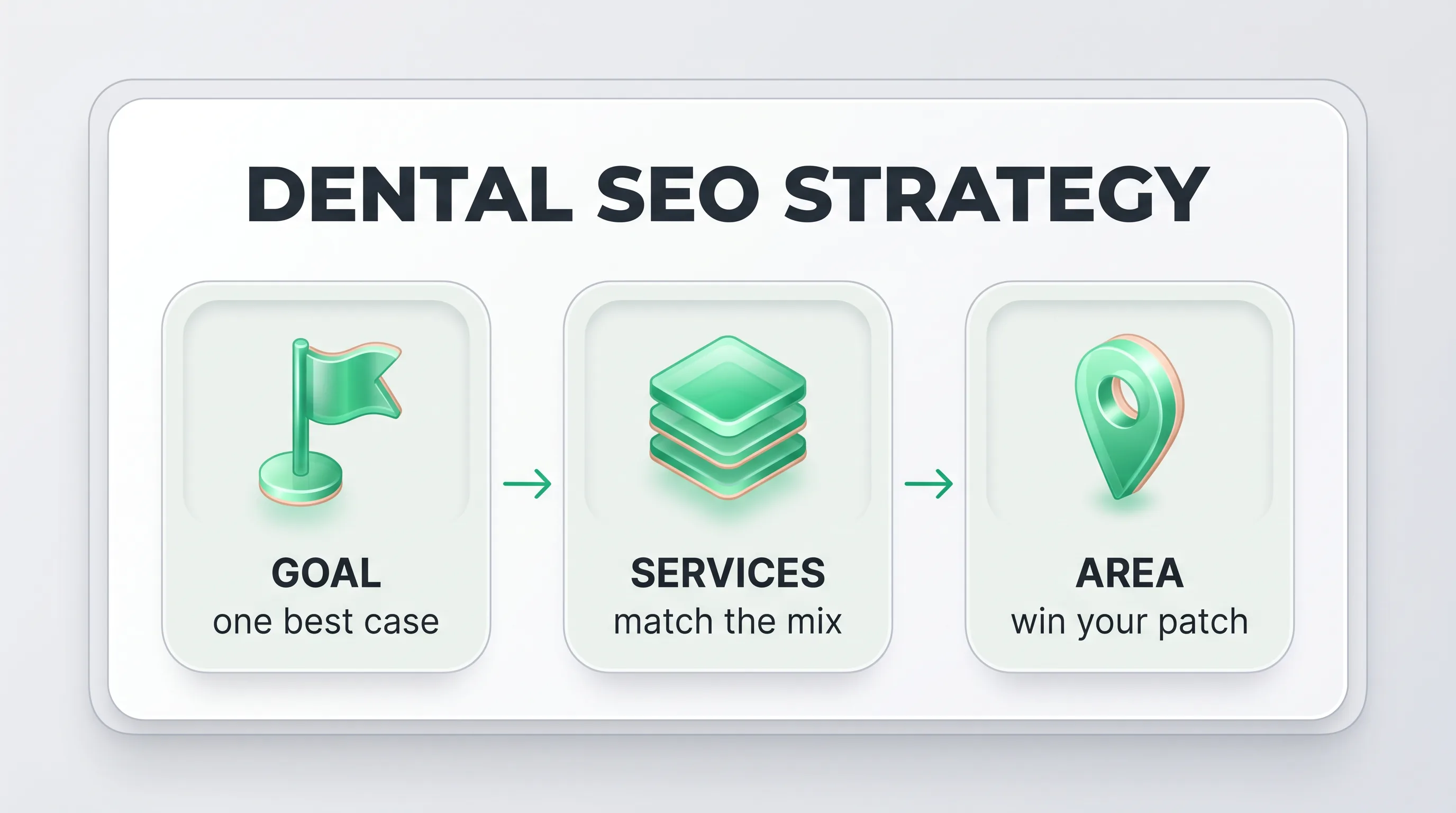
Start with one growth goal, one service mix, and one catchment
A patient weighing dental implants in your postcode is not the same as one searching for a hygiene appointment across town. Before any page gets written or any ranking gets chased, you need to name the treatment that drives your best case value, the service mix that supports it, and the geography where you can realistically win. A dental SEO plan without those three anchors is just a list of tasks with no direction.
Most practices try to rank for everything at once. The result is scattered effort, thin pages, and slow traction. Pick the one or two services where you want more accepted cases, not more inquiries, and let that decision shape every other choice downstream.
Separate site-wide priorities from local visibility before work starts
Two distinct problems sit inside most dental practices' search performance, and confusing them wastes months. Site-wide priorities cover service page depth, technical health, and the content that earns organic rankings beyond your immediate neighbourhood. Local visibility covers the map pack, proximity signals, and the profile a patient sees when she searches late on a Sunday night from half a mile away. The tactics for each are different, the timelines differ, and the person who executes them may differ too.
Decide which problem is more acute before work starts. If your site barely ranks for your own practice name, technical and on-page work comes first. If the site is solid but the map pack shows competitors two streets away, the focus shifts. For the map pack side of that decision, local SEO for dentists covers the execution detail this page deliberately leaves out.
Choose the few pages that should earn the next patient inquiry first
Not every page deserves equal attention this quarter. A practice with twelve service pages and a homepage competing for the same broad term has spread its authority too thin. Choose three to five pages that map directly to your growth goal, then build depth there before touching the rest. Keyword planning guides which terms those pages should target, but the page selection itself is a strategy call, not a research output.
Prioritise pages where a ranking improvement converts to a booked consultation, not just a visit. An implant page that moves from position nine to position three will change your schedule. A general FAQ page doing the same will not.
Turn the plan into monthly SEO work the team can sustain
Set clear ownership for approvals, content, and phone-answering routines
Monday morning: a new service page draft sits in a shared folder. The clinician who needs to approve it is in surgery until Thursday. The front-desk coordinator who handles the booking link has not been told it is going live. By Friday, the page is published with the wrong call to action and no one to field the extra calls it generates. This is how sound strategies stall, not from bad SEO, but from unclear ownership inside the practice.
Name one person who approves clinical copy, one who handles content scheduling, and one who updates the front desk when a new page or offer goes live. Three named roles, written down. Without that structure, every month of ongoing dentist SEO work creates friction instead of momentum.
Work in a sequence that fixes bottlenecks before adding more tactics
Adding a blog programme to a site that takes six seconds to load on mobile fixes nothing. Adding review-generation to a Google Business Profile with an incorrect address wastes the effort. Sequence matters more than volume of activity. Fix indexing and crawl issues first, then improve the pages that should rank, then build the content layer on top of a stable foundation.
In practice, the first four to six weeks of a serious dental SEO strategy should resolve technical blockers and strengthen the two or three highest-priority pages. New content and link-building come after, not alongside. If you are evaluating outside help, understanding what dental SEO services should include at each phase helps you hold any provider accountable to that order.
How detailed should the roadmap be before you spend money?
Detailed enough to show sequencing and named deliverables, not so detailed it becomes a document nobody reads. A roadmap should answer three questions: what gets fixed in the first sixty days, which pages are prioritised and why, and what does month-three look like if the first phase lands on time. Anything beyond that is usually padding.
Budget conversations belong in the roadmap too. If you want to understand what drives the cost differences between providers before committing, SEO cost breakdowns cover that without requiring a full agency pitch first.
How long does dental SEO take to start booking patients?
It depends. The honest answer is that no single timeline fits every practice, because the work starts from a different place each time. A technically sound site targeting routine care in a quiet catchment moves earlier than a rebuilt site chasing implant enquiries in a crowded city centre. Judge the timeline by the factors that actually govern it, not by an agency's calendar.
These are the variables that decide whether traction arrives early or late:
| Factor | Why it shifts the timeline |
|---|
| Condition of the current site | Broken structure, slow pages or a recent migration have to be fixed before any content can earn its position. |
| Treatment being targeted | High-value work such as implants or orthodontics is contested by practices that have been publishing for years. Hygiene and routine care face thinner competition. |
| Size of the catchment | A dense urban postcode with several established competitors takes longer to break into than a town where few practices invest in search. |
| Local profile strength | An active, well-reviewed Google Business Profile tends to move before organic pages do. |
| Domain history | An established site with existing coverage builds faster than a brand new practice with no footprint. |
| Pace of approvals | Content that sits unapproved with the principal stalls everything behind it. |
Two of those factors sit entirely with the practice. Approval speed and the quality of clinical input decide how quickly pages go live, and that pace often matters more than anything an agency controls.
Expect movement to arrive in stages rather than all at once. Map pack visibility and branded searches usually shift before competitive treatment pages do, so ask what should improve first and treat that as the early checkpoint.
Know if the strategy is moving the schedule
See how rankings, calls, and booked care connect
Rankings alone tell you almost nothing about whether your dental SEO strategy is working. A practice can sit at position two for a high-volume term and see zero new implant consultations because the page does not convert, or because the front desk does not answer calls from unknown numbers between 12 and 2pm. Track rankings alongside calls from search, booked visits attributed to organic, and what those visits are actually for.
The kind of care those visits turn into matters most. If SEO is bringing in more hygiene appointments but your growth goal is restorative cases, the strategy needs repointing, not celebrating. When you want to see how this plays out over a real campaign cycle, SEO case studies show what the data pattern looks like before and after a strategic shift.
Set a realistic timeline for traction once the basics are fixed
Three months is roughly when technical fixes and page improvements begin to register in rankings. Six months is when a well-executed strategy starts moving new patient volume in a measurable way. Expecting significant schedule change at week eight leads practices to abandon work that was about to compound. Practices that replace one provider with another before the previous work has had time to land end up restarting their SEO from the beginning each time.
If the strategy requires outside expertise to execute, SEO expert selection covers what to look for before you hand that over. Set the timeline expectation before work starts, not after the first report lands with no dramatic numbers on it.
A dental SEO strategy earns its value when the patient who books your next consultation arrives already leaning toward the treatment plan you would recommend.