Hire a dental SEO expert for the right job
What should an expert diagnose before proposing a plan?
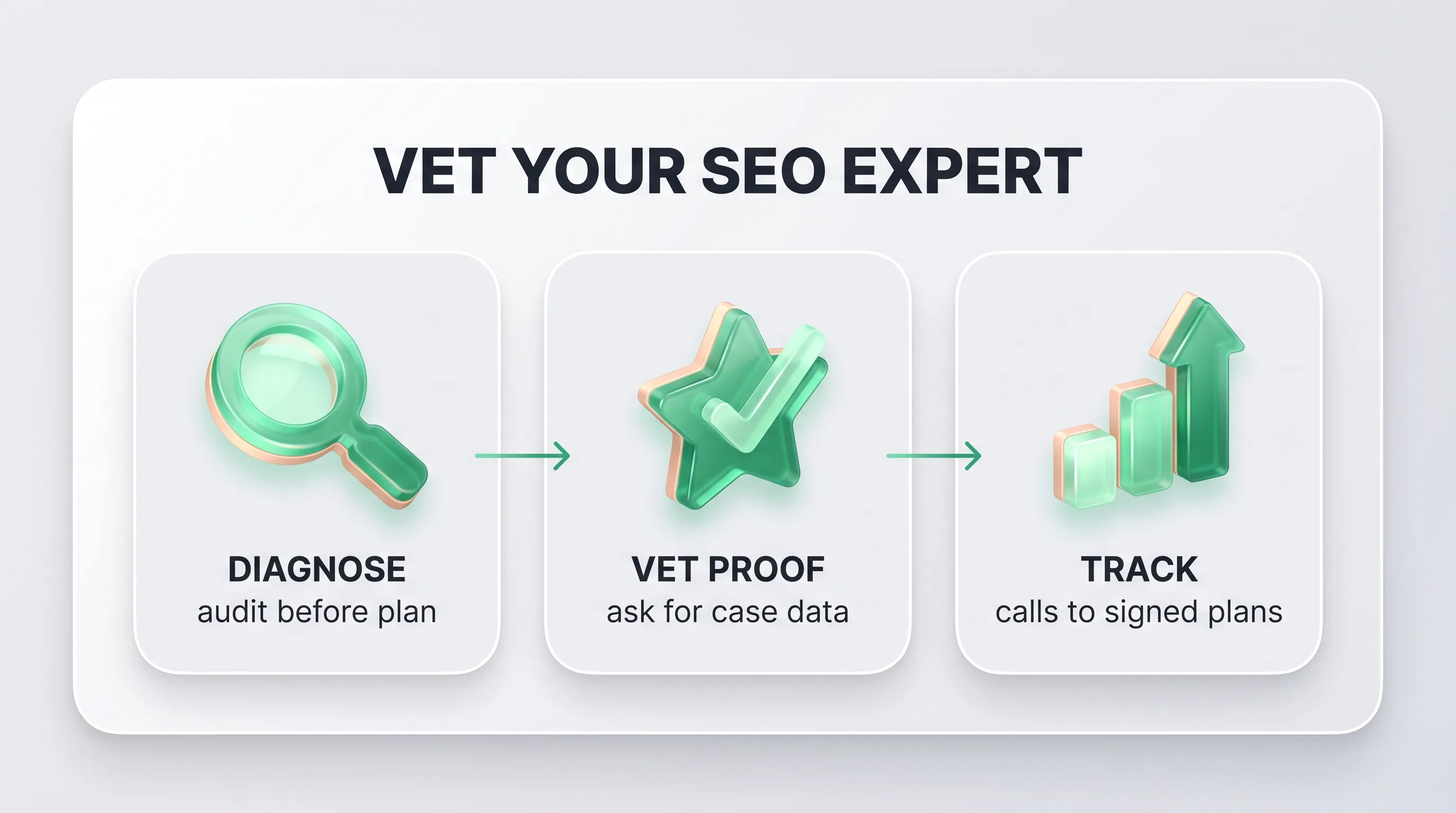
Before engaging anyone, ask whether they have looked at your current rankings, your site's technical health, and where inquiries actually drop off. A dental SEO expert who skips that diagnostic and jumps straight to a proposal is selling a package, not solving a problem. Before anything else, they should map your existing organic visibility, identify which treatment pages have indexing gaps, and confirm whether local search or broader content is the bottleneck. That audit shapes every decision that follows, so if it is missing, the plan is guesswork. For a broader view of what this discipline covers, the dental SEO service framework explains the full scope. Reviewing a checklist of proven dental SEO tips beforehand helps you judge whether a candidate's diagnostic findings hold up.
When specialist dental experience matters and when general SEO is enough
Google classifies dental content under YMYL, meaning it weighs clinical credibility alongside the usual ranking signals. A generalist who has never written about implant candidacy or sedation protocols will produce content that reads thin to both the algorithm and the patient reading it at 10pm. Specialist experience matters most when you are targeting high-value, high-consideration treatments where the page must earn trust quickly. For simpler local visibility work, a strong generalist with local SEO foundations can get the job done. The question is what your growth is actually gated on right now.
How to tell whether you need one person, an agency, or in-house support
Single-location practices with one treatment focus rarely need a full team. One experienced specialist, covering technical fixes and content, usually moves the needle faster than a committee. Multi-location groups, or practices targeting several high-value services at once, tend to outgrow a solo operator quickly because the volume of content, local SEO for dentists across each site, and reporting becomes too large for one person to sustain at pace. In-house support makes sense only when you have a full-time content need and a manager to direct it. Most practices do not, and they discover this after six months of inconsistent output. Practices adding a children's specialty should apply the same content rigor used for adult treatment pages to pediatric dentist SEO.
Check the proof before you sign
Reviews, case evidence, and reporting that actually help you judge fit
Testimonials from happy clients tell you almost nothing on their own. What you want is a dental SEO case study that shows the starting position, the specific work done, and the ranking or traffic movement over time. Ask for it in writing, not a slide deck. If the provider cannot show you month-by-month data for a practice that resembles yours in size and market, treat that as a signal. Reviews matter for a different reason: patterns in complaints about communication and reporting delays surface problems that capability claims never will.
What results should look like: calls, booked patients, and the procedures they book
Rankings are not a result. They are a leading indicator. The result is a patient who calls, books, and shows up for a consultation on implants or Invisalign, not a cleaning they found cheaper across town. A credible dental SEO expert tracks call volume by source, monitors which treatment pages drive conversions, and connects that data to your actual appointment mix. If the monthly report shows keyword positions but no call tracking, you cannot tell whether rankings are generating revenue or just traffic that leaves. Push for that connection before you sign.
How long should progress take once the basics are fixed?
Once technical errors are resolved and core pages are optimized, most practices see measurable local ranking movement within three to four months. Meaningful increases in qualified calls typically follow within five to six months, depending on market density. Those ranges appear consistently across sources that track dental SEO engagements. Anyone promising page-one placement in thirty days is not describing SEO. Understand what dental SEO cost covers across that timeline before you commit, because the work in months one and two looks different from months five and six.
Avoid the handoff problems that waste months
Who owns content, approvals, and site access on day one
Projects stall when neither side has agreed who holds the CMS login and content approvals sit unread in an office manager's inbox. The fix is a one-page ownership document signed before work starts: who provides site credentials, who reviews and approves clinical content within how many business days, and who holds DNS access if technical changes are needed. Vendor lock-in is the other half of this. Confirm you own your domain, your Google Business Profile, and every piece of content produced. If those assets sit in the agency's account, leaving costs you your history. A clear dental SEO strategy document should name these ownership lines explicitly.
What your front desk must track so good rankings turn into patients
A patient searching for a cosmetic consultation finds your page, reads it, and calls at 6:30pm. If your front desk logs that call as a generic inquiry rather than an SEO-sourced lead for cosmetic work, your expert has no signal to optimize against. Ask every new caller how they found you, log the treatment they mentioned, and record whether they booked. That three-field habit takes fifteen seconds and gives your SEO partner the data to shift content effort toward what converts. Good dental SEO services include call tracking setup, but the front desk has to use it. Rankings that no one measures downstream are just numbers on a report.
The right dental SEO expert narrows your patient pipeline to the procedures that sustain your practice, but only if your side of the handoff is as prepared as theirs.