

Your implants page comes up first, but two people called all month.
A page that earns a click can still lose the patient if the booking path does not match what she just read. The gap between a detailed treatment page and a generic contact form is where most enquiries quietly disappear.
A patient weighing ceramic veneers does not type "dentist Adelaide" and scroll through 40 results. She types "cosmetic dentist Norwood" or "veneers Unley" because she lives there, works nearby, or her friend recommended a suburb. That search behaviour is the first thing your dental SEO services plan has to answer before any other decision gets made.
Adelaide-wide terms carry search volume, but they also carry competition from every multi-chair group practice and corporate chain in the metro. For a single or dual-practitioner clinic, the real opportunity sits in a 5 to 8 kilometre catchment. Implants and orthodontics pull from further out; hygiene and check-ups rarely cross two suburbs. Matching your targeting to that reality stops you pouring budget into rankings you cannot hold.
A single page titled "Dental Services Adelaide" cannot rank for implants, Invisalign, and emergency care simultaneously. Each of those treatments represents a different patient, a different search moment, and a different decision timeline. A patient researching clear aligners for six months behaves nothing like someone with a cracked molar who needs to be seen before her flight tomorrow morning. Separate pages let you speak to each decision directly, and they help Google understand which query each page actually serves.
When you map treatment pages to specific local intent, your dental SEO keywords shift from broad to precise: "dental implants Glenelg" instead of "dental implants Adelaide." That precision narrows your competition and raises the chance that the patient reading the page is already close to a decision.
Before a patient calls your practice, she has already checked your hours, confirmed you bulk-bill or offer payment plans, scanned your parking situation, and looked at whether you have a female practitioner available. These are not afterthoughts. They are the filter she runs before she picks up the phone. If your pages do not surface those details, she moves to the next result and finds them there.
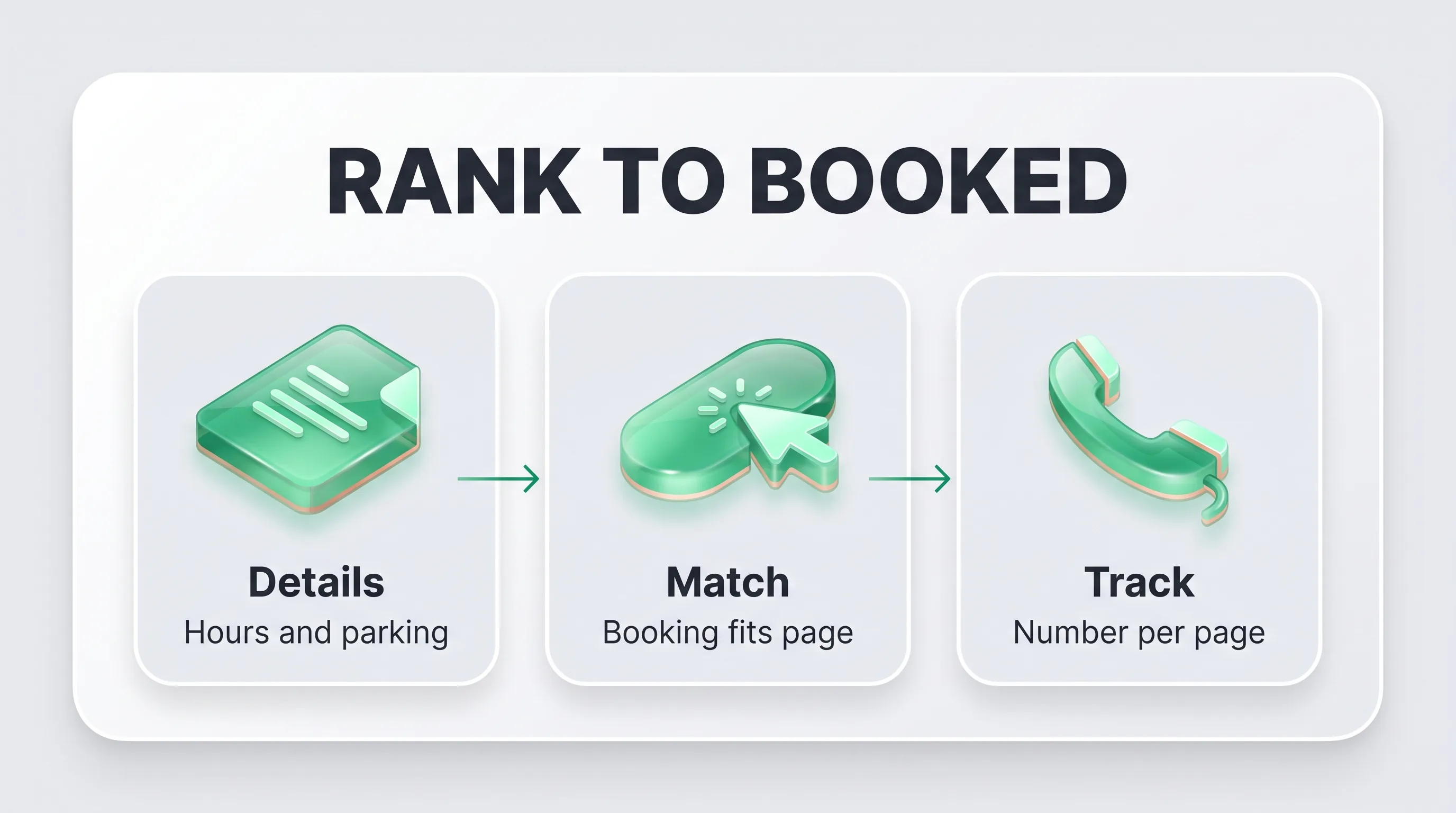
Embed opening hours, suburb location, parking notes, and payment options in the body of treatment pages, not just in a footer or a contact tab. Google surfaces this content in snippets; patients read it before clicking. Those small signals convert a ranking into a call.
Twelve near-identical suburb pages, each swapping one postcode for another, no longer earn rankings in Adelaide or anywhere else. Google reads thin location pages as duplication and suppresses them. The fix is not more pages: it is richer context on the pages you already have. Mention the local area where it genuinely shapes the patient's decision, such as proximity to a train line, a carpark, or a landmark a suburb resident would recognise.
One page per core treatment, with authentic local signals woven in, outperforms a directory of hollow suburb clones. For the full workflow on listings and map presence, local SEO for dentists covers the citations and profile detail this page keeps brief.
I worked in a practice that built a beautiful before-and-after gallery for its veneers page. Three months later, a compliance review flagged it: the images lacked the required disclaimer, and two captions implied guaranteed outcomes. The gallery came down, and so did the page's conversion rate while we rebuilt it properly. That cost was entirely avoidable.
AHPRA guidelines prohibit misleading claims, testimonials that imply a typical result, and before-and-after images without proper consent and contextual disclaimers. For an Adelaide dental practice, this is not a technicality: it is the boundary inside which all your local trust content must live. Reviews cannot promise outcomes. Patient stories need careful framing. Educational content, care instructions, and treatment overviews built around what a patient can expect, rather than what they will get, keep you compliant and still persuasive.
For map-pack visibility and review acquisition within those same boundaries, Google Maps SEO for dental practices addresses the platform-level detail.
A patient ready to enquire about dental implants after reading a detailed implants page does not want to land on a form that asks her name, email, and "reason for visit" with a free-text box. That gap between her intent and your form is where enquiries die. The booking path should match what she just read: a specific call to action for implant consultations, with an indication of what the first appointment covers and how long it takes.
Integrating booking platforms like HotDoc directly on the treatment page, rather than routing through a generic contact page, cuts friction at the moment the patient is most motivated. If you are evaluating what this takes across your full site, a structured SEO strategy for dental practices covers the broader build.
Rankings move. What does not lie is the appointment book. If your implants page ranks in the top three for its suburb term but generates two enquiries a month, the page has a conversion problem, not a visibility problem. Tracking at the level of calls and booked patients, segmented by which page and which suburb drove the contact, tells you where the real constraint sits.
Set up call tracking numbers by service page, not just by channel. That way, when a Thursday afternoon spike comes in from Burnside, you know whether it came from your implants page or your clear aligners page, and you can reinforce what worked. For the broader foundations that make this attribution reliable, dentist SEO basics covers the technical layer this Adelaide-specific guide skips.
More impressions with no new bookings is a specific diagnosis. The page earns the click but loses the patient somewhere between arrival and contact. The first place to check is load speed on mobile: over 65% of dental searches in Australia happen on a phone, and a page that takes more than three seconds to load on a 4G connection loses a measurable share of those visitors before they read a word.
After speed, check the match between the page headline and what the patient expected when she clicked. A gap there, even a subtle one, raises bounce rates on high-intent pages. Finally, review the call to action: is it visible above the fold on mobile, and does it name the specific treatment? If you are weighing whether this warrants outside help, what a dental SEO expert actually handles explains the division of work clearly.
Every ranking you earn in Adelaide only pays when the patient at the other end arrives at your door already decided.
We review your pages, search visibility and enquiry path, then show you what to fix first.