

One unanswered call Thursday cost a full-arch implant case.
Most dental practices lose patients not because they are hard to find online, but because the page a patient lands on does not answer her real questions, or the front desk takes two days to call back. Finding exactly where that drop happens changes which problem you fix first.
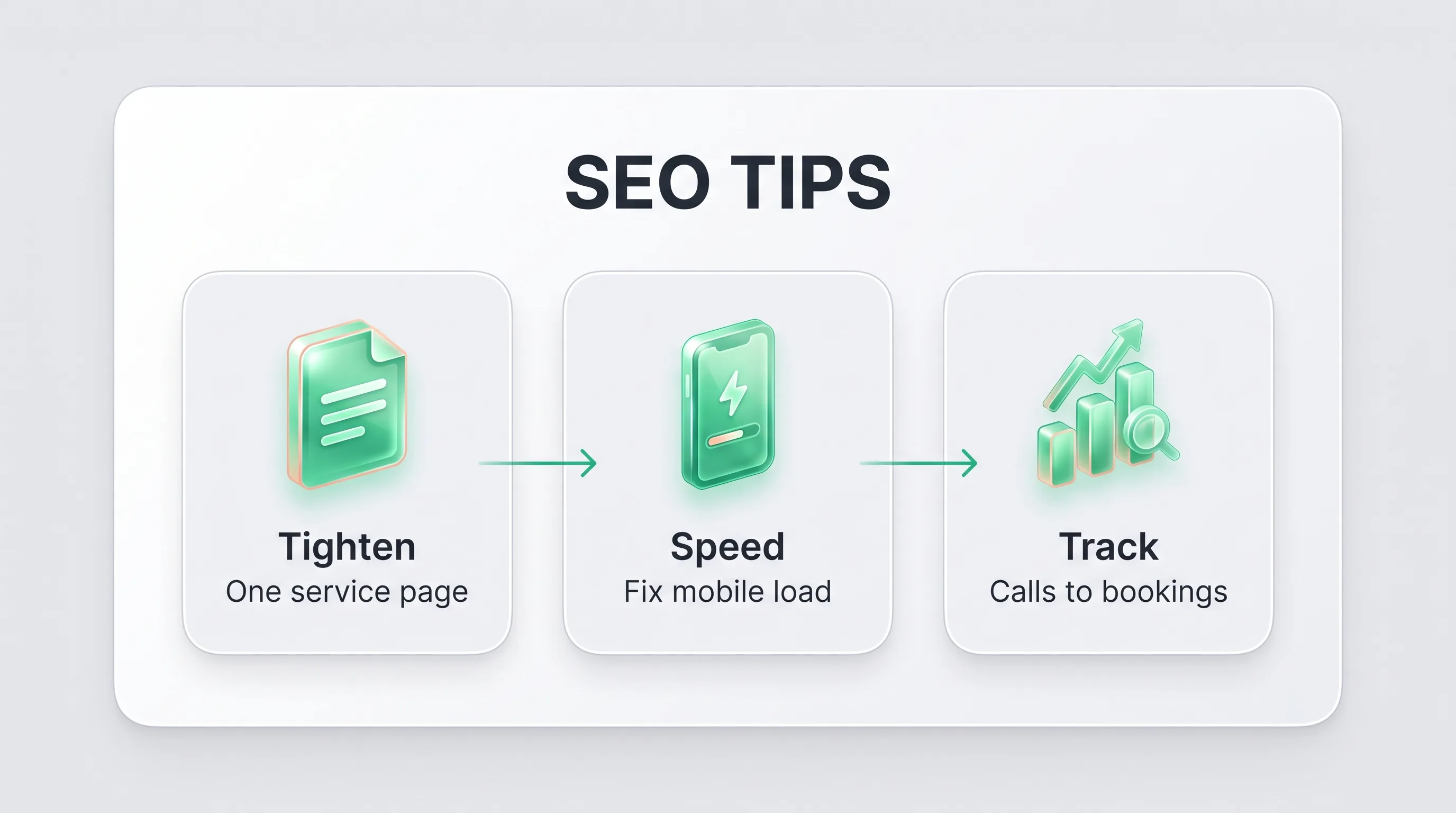
Pull up your implant page, or your Invisalign page, whichever treatment drives the case mix you actually want. Read it as a patient would. Most practice pages list the treatment, mention the doctor's name, and stop. That is not a page that converts; it is a brochure that ranks poorly. A strong dental SEO foundation starts here, at the page level, before you commission a single new blog post.
One primary keyword per page, woven into the title, the H1, and two or three natural spots in the body. Add a clear next step: a phone number, a booking link, or a short form visible without scrolling. Tightening one page this way consistently outperforms adding five thin pages.
A patient weighing porcelain veneers is not searching "cosmetic dentistry". She is searching "veneers cost in [city]" or "how long do veneers last". Your page title and H1 should reflect what she types at that stage, not a category label your receptionist uses internally. Use the formula: treatment plus location plus practice name, kept under 60 characters. That is what wins the click. For deeper guidance on assigning the right terms to each page, a dedicated resource on dental SEO keywords walks through the selection logic in detail.
Inside the page, answer the three questions every patient carries: what does the procedure involve, how long does it take, and what does recovery look like. These details push a hesitant reader toward booking rather than clicking back to Google.
Two pages chasing the same term split your authority and neither ranks well. This happens most often when a practice has a "dental implants" page and a separate "tooth replacement" page targeting nearly identical queries. Google picks one, usually the weaker one, and your strongest page stalls. Audit your service pages by opening Search Console, filtering by URL, and noting which queries trigger more than one page at once. Consolidate or differentiate the content so each page owns a distinct slice of intent.
Over 60% of local service searches happen on a phone, and a slow load on mobile costs you the visit before the patient ever reads a word. The single biggest culprit in most dental sites is uncompressed photography: a gallery of operatory shots uploaded straight from a DSLR can add several seconds of load time. Compress every image before it goes live. Then walk the booking path on your own phone: tap the button, fill the form, confirm. Broken steps here are silent revenue losses your analytics rarely surface on their own.
If you want a fuller audit of structure and page architecture alongside speed, a guide on dental website SEO covers both in one place.
A patient standing outside a competing practice will pull her phone and compare you in under thirty seconds. Your name, your key service, a tap-to-call button, and a booking link need to appear above the fold on a 375-pixel screen without pinching. Navigation menus that work on desktop and collapse into an unusable stack on mobile destroy that moment. Test your most important service pages on a real device monthly, not just in a browser emulator.
Map pack visibility reinforces every click you earn from organic listings, so the on-page work and local presence operate together. A deeper look at that combination lives in our guide to local dental SEO.
Rankings rarely collapse overnight. They decay slowly, a few positions per month, until a page that once pulled fifteen inquiries a week pulls three. The cause is usually a page that was optimized well in 2023 and never touched since: fees that have changed, photos that show outdated equipment, procedure descriptions that no longer match how you actually deliver the treatment. Google's freshness signals reward pages where the content date, the clinical detail, and the structured data all reflect current practice.
Schedule a quarterly read-through of your top five organic pages. Update any figure that has shifted, replace photos if the technology has changed, and adjust the title tag if local competitors have moved into position with stronger copy. This is the one tip that most competitor guides skip entirely. A page that once ranked does not need to be rebuilt; it needs a deliberate refresh cycle. That discipline alone can recover rankings you assumed were simply gone.
A patient emails after hours asking about full-arch implants. Your front desk doesn't see it until the next afternoon. By then she has booked with the practice that answered within the hour. The SEO worked. The conversion did not. Before attributing flat new-patient numbers to rankings, map where the drop actually happens: impressions are up but clicks are flat (title problem), clicks are up but calls are flat (page problem), calls are up but booked visits are flat (front-desk problem). Each requires a different fix. If you need a fuller framework for sequencing these priorities, a resource on dental SEO strategy addresses the roadmap from the top down.
Rankings and organic traffic are inputs, not outcomes. The number that matters is how many of those inquiries turn into accepted treatment, particularly for the high-value cases your optimized pages were built to attract. Set up call tracking tied to specific pages so you know which service page drove each inquiry. Log form submissions separately from calls. Then ask your front desk to record whether each inquiry became a booked visit and, once seen, which treatment was accepted. When those four data points sit in one view, the seo tips for dental practices that actually move revenue become obvious fast: you stop guessing and start cutting or scaling based on real case data. If the implementation exceeds what your team can handle in-house, a comparison of dental SEO services can help you scope the right level of outside support.
The practices that grow steadily from search are the ones that treat SEO as a maintenance discipline, not a one-time project.
We review your pages, search visibility and enquiry path, then show you what to fix first.
.svg)