

She booked the other practice because they called her back that same evening.
Running more ads or adding more pages will not help if a patient who contacts you at 8pm hears nothing until 9am the next day. The gap between a patient reaching out and your team responding is where high-value cases are lost, not in which channels you are using.
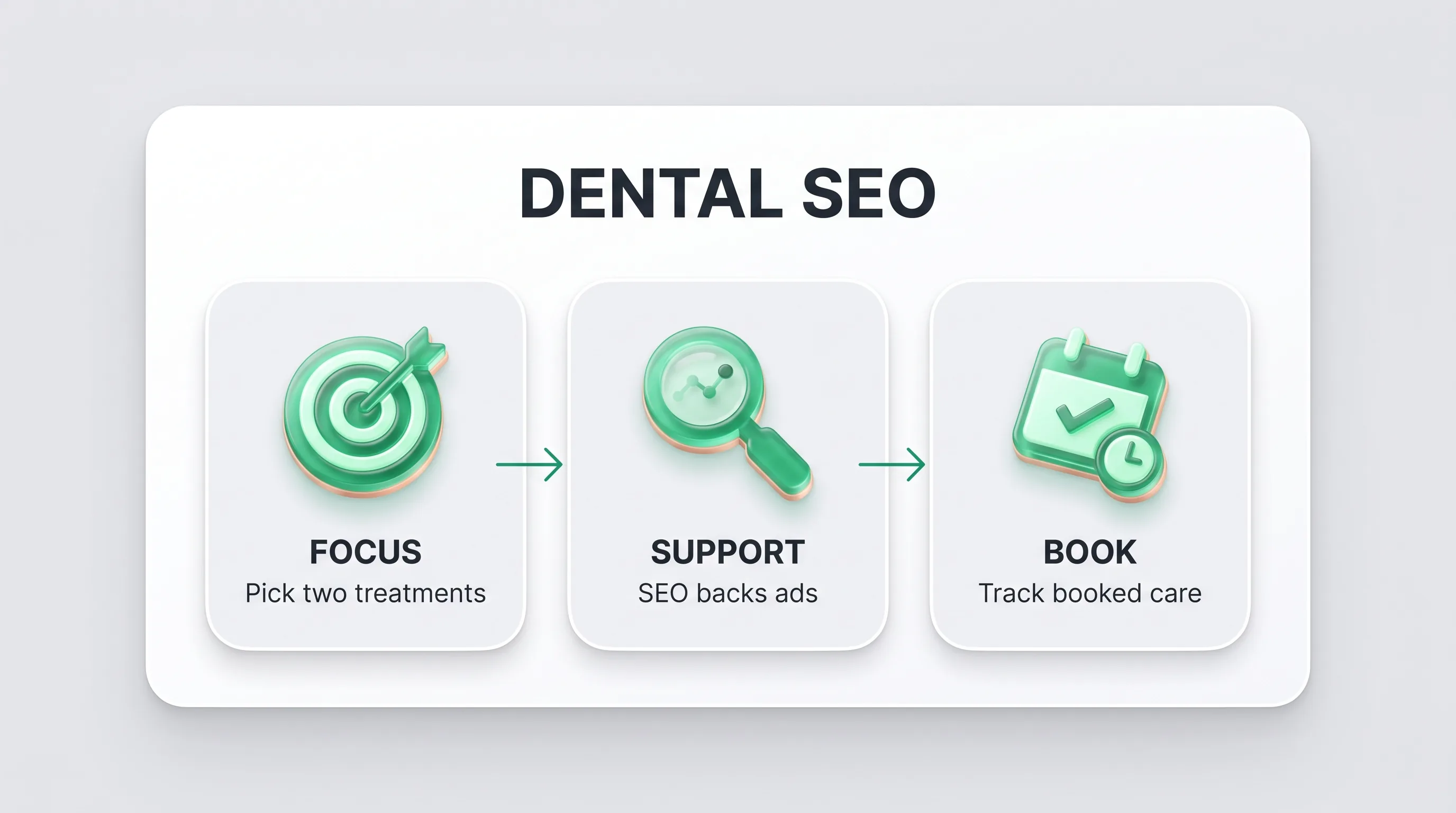
When a marketing plan tries to chase every treatment type a practice wants more of, nothing moves. Pick a small number of high-value treatments and build every message around those, and the quality of your inquiries changes. Dental marketing and SEO work the same way. A practice that ranks for implants, cosmetic work, or clear aligners attracts patients who have already been weighing a decision, not patients looking for the cheapest cleaning nearby.
Picking the right treatments first shapes which pages you build, which searches you show up for, and which calls your team receives. Without that filter, you optimize for volume and wonder why case acceptance stays flat.
Organic SEO typically takes four to six months before it produces a measurable lift in booked visits. Paid search can generate inquiries within days. Those two timelines serve different needs, and conflating them is where most practices waste budget. For a broader view of how to balance both, the right search engine marketing mix matters more than any single channel decision.
Run paid campaigns for procedures with immediate demand while organic pages build authority in the background. Once organic starts converting, you can pull back paid spend on that treatment and redirect it to the next one you want to grow.
Three channels your team cannot sustain beat six channels running at half capacity. Every inquiry a channel generates needs a human response, a page to land on, and a booking step that works. If your front desk is already stretched, adding social video and a referral programme alongside ads and SEO means none of them receive the follow-through they need. Pick what your team can close, not what looks complete on a marketing deck.
A patient clicks your implant ad on a Thursday evening. She lands on your service page, reads two paragraphs, then searches separately for "how long do dental implants last" and "implant recovery time." If those questions hit a competitor's blog, she may book there instead. Your SEO content should intercept exactly the questions your ads and referrals generate, not exist as a separate programme that earns rankings for their own sake.
Map your paid keywords to the informational queries they predictably trigger. Build those pages, link them to your service page, and the organic content becomes the second half of a conversation your ads already started. A clear dental SEO structure makes that handoff deliberate rather than accidental.
Two pages targeting the same treatment phrase split your ranking signal and confuse the patient. Paid landing pages are built to convert; service pages are built to rank. When they share near-identical headlines and body copy, Google cannot determine which deserves the organic position, and neither earns it cleanly. The fix is a firm content contract: the service page carries the treatment information and targets the organic query; the paid landing page strips navigation, sharpens the offer, and sends traffic directly to a booking step.
Practical rule: if your landing page and service page would answer the same patient question, consolidate them or differentiate the intent each one serves. For a sharper view of keyword targeting by treatment page, the distinction between informational and transactional intent is where the separation begins.
A patient submits a contact form at 8pm. Your team reads it at 9am. By then she has booked at the practice that called her back that same evening. More traffic does not fix a slow follow-up process; it amplifies the cost of it. Before you invest in growing organic sessions, confirm that every inquiry channel has a defined response window, a named person responsible, and a booking path that does not require the patient to call during hours she cannot.
Local map visibility sends calls, not just clicks, so the local visibility side of SEO only pays off when your phones are answered and your booking link actually works on mobile.
Rankings and sessions are inputs, not outcomes. A page ranking first for a high-value treatment that generates calls nobody answers produces zero revenue. The metric chain that matters runs from first contact to booked visit to accepted treatment plan. Track each step together, because a drop anywhere in that chain tells you where to intervene. If calls are high but bookings are low, the problem is your front desk or booking process, not SEO. If organic traffic is growing but calls are flat, the page may rank for the wrong intent.
Knowing what SEO budgeting should produce in measurable outcomes helps you hold the channel accountable rather than accept activity reports as proof of progress.
SEO is the bottleneck when your pages receive low organic impressions for the treatments you want, or when your site ranks but earns no clicks because a competitor dominates the map pack. Another channel is the bottleneck when organic traffic is adequate but inquiries do not convert, your ads generate clicks that bounce, or referrals arrive without enough information to say yes. Diagnosing which constraint you face before adding spend or content saves months of misdirected effort. A set of targeted dental SEO tips can help pinpoint which fixes turn stalled rankings into booked visits before you increase spend.
A structured SEO roadmap sets the sequence so you address the actual constraint first rather than optimizing the channel that already works.
When dental marketing and SEO share one measurable goal, every channel you run pulls the same direction and each new patient moves one step closer to an accepted case.
We review your pages, search visibility and enquiry path, then show you what to fix first.
.svg)