

At 9pm, a patient with sudden vision loss needs a voice, not a form.
Patients type their symptoms in plain words, like blurry or sudden shadow, not medical terms. When your urgent page only offers a form, that patient calls the clinic that picks up the phone tonight.
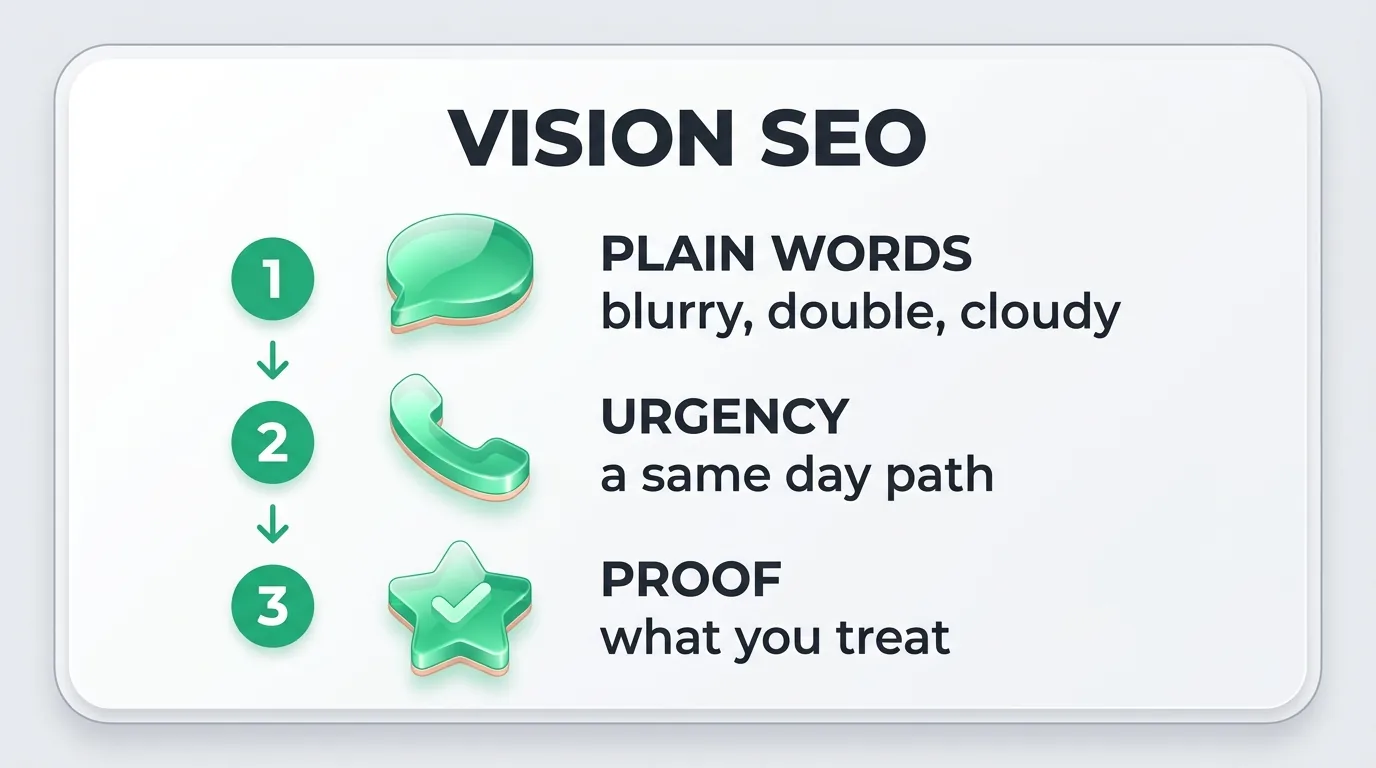
A man types "vision blurry in one eye at night" into his phone at 10pm. He has never heard of a posterior subcapsular cataract, and he never will until someone explains it to him. An SEO vision that works for an eye clinic starts in his vocabulary and walks back to yours.
Blurry, double, cloudy, halos around oncoming headlights, print that fades in dim light: those strings carry the real search demand. Clinical terms earn their place further down the page, once the plain explanation has already done its job.
One page listing eight symptoms ranks properly for none of them.
Give each concern its own page, then give that page somewhere to go: what usually causes it, which test confirms it, what the visit looks like, one clear next step. Most symptom pages stop after the explanation. The patient finishes reading, learns something useful, and leaves to find the clinic that told them what to do about it. How those entry points connect to exam, eyewear and specialty service lines belongs to the broader work of SEO for optometry practices.
Years ago my front desk spent part of every Monday calling patients back to say we did not manage their concern. They had found us, read nothing to the contrary, and waited three days for an appointment we then had to hand off.
Say it on the page instead. Name the concerns you diagnose and treat yourself, the ones you co-manage with a surgeon, and the ones you refer out. Patients searching symptoms cannot tell an optometrist from an ophthalmologist, and nobody should expect them to. Stating that boundary protects your chair time and still wins the booking, which is where a wider eye care SEO program starts earning.
Some vision changes cannot wait for Thursday's open slot. A patient searching at 9pm needs to know that within seconds, and your page is what tells them.
Ranking for symptom searches hands you part of the triage. A page that describes retinal detachment and then offers only a booking calendar three weeks out leaves the patient waiting and leaves you exposed. Keep those flags near the top, in plain words, with the instruction attached: if it started today, call now.
A form submitted at 7pm sits in an inbox until 9am. For someone losing sight in one eye, those overnight hours decide everything, and most of them will phone another clinic before your team opens the laptop.
So on urgent pages, drop the form. Publish a number that rings somewhere staffed, say which hours it covers, and say what to do outside them. Put the after-hours instruction above the clinic address, because that is the order the patient needs it in. The handoff between the search and the voice that answers it sits in where search sits in your marketing mix.
Progressive lenses, contact lens choices, laser candidacy, when a cataract is ready to come out: patients read about these for weeks and talk to a spouse before they call. An SEO vision for that slower demand runs on a different clock.
Let those pages answer completely. What the options trade off, who makes a poor candidate, what the appointment involves, a form someone replies to the next morning. Routine demand also pays back over a longer horizon than urgent demand, a question developed in what optometry search spend returns.
A patient in her sixties sits in your waiting room holding a quote from the clinic she visited first. She has delayed cataract surgery for two years, and she drove past that clinic to reach you because your page told her exactly what the visit would involve.
Describe the testing. Dilated examination, retinal imaging, visual field, the measurements that decide a lens choice: name them, say roughly how long the appointment runs, say what she can and cannot do afterwards. Once the concern points toward theatre, the argument shifts to surgeon depth in ophthalmology search.
Patients compare four clinic websites in one sitting. Vague superlatives read identically across all four, so they decide on whatever they can actually check.
Write what you can stand behind. How many of these procedures your clinic performs in a typical month, what the usual recovery looks like, how often a second adjustment is needed, and what you do not promise. Say plainly that outcomes vary with the eye in front of you. A patient who reads an honest limit believes the rest of the page, and arrives ready to say yes.
Write for the words patients actually search, route the urgent ones to a voice, and the booking follows.
We review your pages, search visibility and enquiry path, then show you what to fix first.
.svg)