

You promised a consult this week, your desk offered eleven days.
A page can promise a quick consult while your desk offers something else, and the caller notices the gap. The same gap shows up in the exam room, where a patient who never read about lens pricing stops to think instead of deciding that day.
A 58 year old reads about premium lenses on a Tuesday night, a month before she calls anyone. She compares two surgeons, then closes the tab. Your cataract page ranks nowhere for that search yet.
Paid search buys the position while the page earns it. Run ads on the terms that lead to surgery, cataract surgeon plus your city, LASIK consultation, and let organic depth build underneath. Honest ophthalmology SEO marketing treats the two as one line, because ads reveal which phrasing produces consult requests, and that evidence decides which pages you write first in your broader eye care SEO plan.
Every channel should end in the same place: a consult request with a date attached.
Most practices break that without noticing. The directory listing pushes a phone number, the ad pushes a landing page, the dry eye article pushes a newsletter signup. Pick one request, repeat it everywhere, and count calls and booked consults instead of sessions. The arithmetic of what one new surgical patient costs you sits in the optometry search marketing payback breakdown.
A draft LASIK page waits five weeks in a surgeon's inbox. The vendor keeps invoicing. Nothing publishes.
Surgical groups stall here more than anywhere else, because the work needs clinical judgment no vendor can supply. Name three people before the first page gets written:
Book a standing fifteen minutes on the clinic calendar for those approvals. Approvals that live in email threads die there, and a plan with no owner produces drafts rather than patients.
Before she types anything, a patient weighing cataract surgery wants two answers: what her insurance covers, and what a premium lens adds out of pocket.
Pages that skip that send her to the phone to find out, and plenty of patients never make the call. State plainly which insurance you accept, what financing exists for elective procedures like LASIK, and what the consultation itself involves. Put it above the form, not in a footer. On a phone, a click-to-call button sitting beside that answer collects more consults than a longer form ever will.
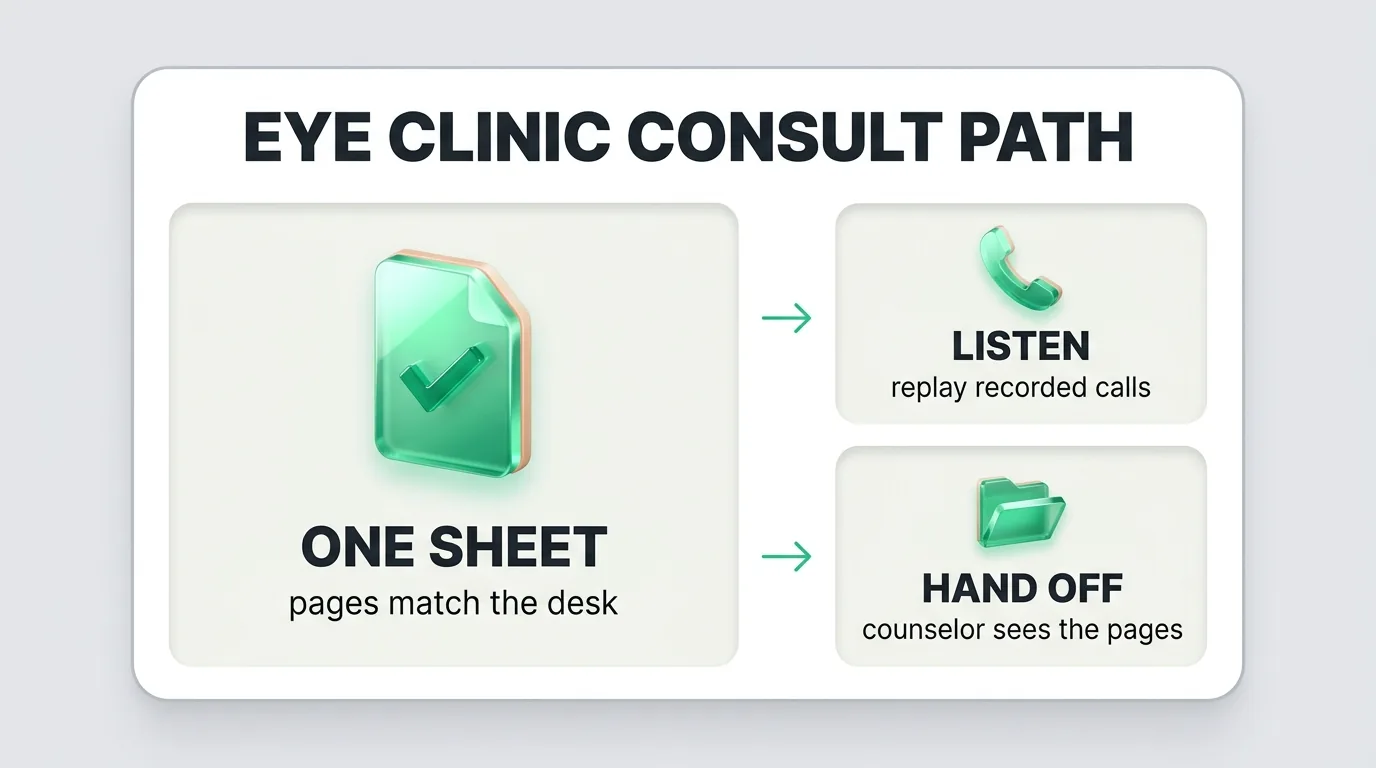
In my own clinic I once spent a week listening to recorded calls. Our page promised a consult within the week. The front desk offered a slot eleven days out, because nobody had told them what the page said.
One sheet fixes that. Every service page, what it claims, and the exact words patients repeat on the phone. When a caller asks about dry eye treatment because she read your page on it, the person answering should recognise the sentence she is quoting. That recognition books the appointment.
The consult rarely decides the surgery. Your counselor does, in the twenty minutes after the dilated exam.
What your pages said shapes how that conversation starts. A patient who already knows lens choices exist, that recovery needs planning, and that the premium option carries a separate fee arrives ready to decide. One who read vague reassurance hears cost for the first time in the room, and leaves to think about it.
Send the counselor the pages each patient read and the search that brought them. Ask which questions keep repeating, then answer those on the page itself. Subspecialty depth and surgeon authority deserve their own build, which the piece on ophthalmology SEO and case mix handles.
In 2026, plenty of patients get their answer without loading your site at all. An assistant summarises who treats glaucoma nearby, and she acts on that summary.
Quotable text is plain text. Write the question the way a patient asks it, then answer it in two sentences before any elaboration: the difference between an optometrist and an ophthalmologist, whether LASIK hurts, how long cataract recovery takes. Name the surgeon who reviewed the page and the board that certified them. Ophthalmology SEO marketing now has to earn a citation as well as a click.
A group runs three surgeons across two offices, and the number they changed years ago still sits in four directories. Machines reconcile those versions badly. A patient reads the stale line, calls it, hears nothing, and books with the practice whose details agreed.
Keep practice name, address, hours, and the surgeon roster identical across your own pages and every listing that carries them. Your Google Business Profile, the listing a patient sees before your site, should match that roster exactly. Hold one internal source of truth, and check it whenever a surgeon joins or leaves.
Pick the owner, name the single consult request, and make every page say what your team can genuinely deliver.
We review your pages, search visibility and enquiry path, then show you what to fix first.
.svg)