

One cosmetic page filled Tuesdays with touch-ups while the surgeon's calendar sat empty.
A page that pulls in the wrong procedure can crowd your schedule without making you more money. The real fix is counting what each provider can actually take on before you build a single page.
A patient who notices a changing mole searches with one question: how fast can someone look at it. The patient comparing laser resurfacing reads for three weeks first. One practice serves both, and the two arrive in nothing like the same state of mind.
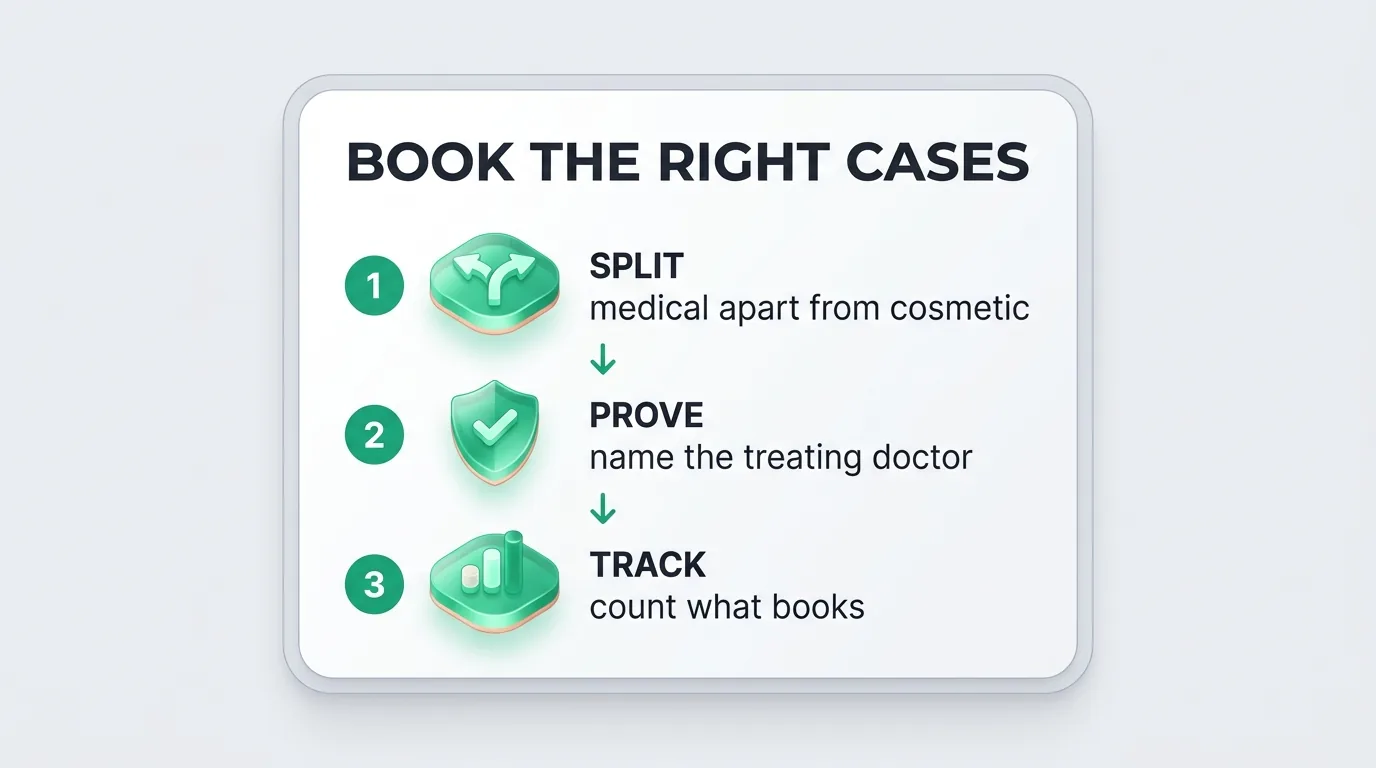
So seo for dermatologists works best when the medical side and the cosmetic side sit on separate branches of the site, with their own navigation and their own pages. Mix them and you lose both: the screening patient wades through pricing language, and the cosmetic patient hits insurance copy and leaves. That split is also where a complete dermatology SEO plan begins.
A condition earns its own page when three things line up at once:
Mohs surgery, eczema, psoriasis, mole removal, fillers: each deserves its own address on the site. A single services page listing twenty treatments ranks for none of them, because it answers no question all the way through.
In my clinic years we pushed one cosmetic injectable page to the top of local results across the county. It worked. Within two months the Tuesday list filled with twenty-minute touch-ups, the surgical slots sat three weeks out, and the clinician who loved that surgical work had the quietest diary in the building.
Rank for the cases you want more of, in the volume you can absorb. Count the open slots each week per provider, then build pages in that order. Visibility you cannot serve turns into long waits, slow callbacks and patients who book elsewhere mid-wait.
At 9pm a woman reads your Mohs surgery page for the second time. She wants to know what happens in the room, how long she waits between stages, what her face looks like the next morning, and whether her plan covers any of it. Nothing on the page says.
So she calls to ask, or she never calls. Write the page that answers in the order patients actually ask: what the visit involves, how to prepare, recovery, risks, and when to be seen sooner. Plain words, no brochure tone. The consult then starts further along.
Dermatology gets judged with the eye, and a cosmetic patient compares your photos against three other sites before she picks one. That makes the paperwork the gate, not the camera.
Take a written release that names the use: website and search results, for how long, whether the face stays identifiable, and how a patient withdraws it later. File it with the chart. Then shoot every pair under the same light, the same distance, the same angle, with no retouching, and state how many weeks sit between the two frames. A patient who spots a lighting trick stops believing the rest of the page.
First-time patients want to know who will actually hold the blade. They scroll straight past the hero image hunting for a name, a certification, a face.
Put the treating clinician's credentials on the treatment page itself, not only on a bio buried three clicks away: board certification, fellowship training for Mohs or cosmetic work, hospital affiliations, how long they have performed the procedure, and the date a clinician last reviewed the content. Google weighs those same signals on medical pages. Your patient reads them faster.
A third-place ranking tells you nothing about whether anyone booked. Calls do, once you can trace them.
Give each major treatment page its own tracked phone number and stamp the source page onto every form submission, so the front desk sheet shows which page produced Tuesday's consults. Two streams feed that sheet: the map listing a patient taps, which belongs to local SEO for dermatologists, and the treatment page she read before calling. Then measure the step that matters most: how many of those consults became scheduled treatment.
You open the quarter and the new patient count sits where it sat three months ago. Most stalls I review in seo for dermatologists come from the last link in the chain, not the first, so work upward in this order through 2026.
Start with the booking step: if pages get read and the phone stays quiet, the problem lives in the scheduling path or in how long an enquiry left on Friday evening waits for an answer. Next, the copy: visitors arrive, skim, and leave before the credentials, because the page answers questions nobody asked. Last, the page set, since no edit creates a page that was never built. Fixed in that order, the cheapest change moves the most.
Build the pages for the cases you want, answer what patients actually ask, and track which page fills your schedule.
We review your pages, search visibility and enquiry path, then show you what to fix first.