

A patient almost chose another surgeon because the page didn't say who was operating.
A patient nearly booked elsewhere because nothing on your surgery page said who would treat her. Pages that name the treating doctor and show real credentials earn trust a blank page cannot buy.
A patient types eczema specialist into her phone at 10pm. She opens three results and books with the practice whose page names her condition and describes what the first visit looks like. Your homepage, listing nine services in a row, never entered that comparison.
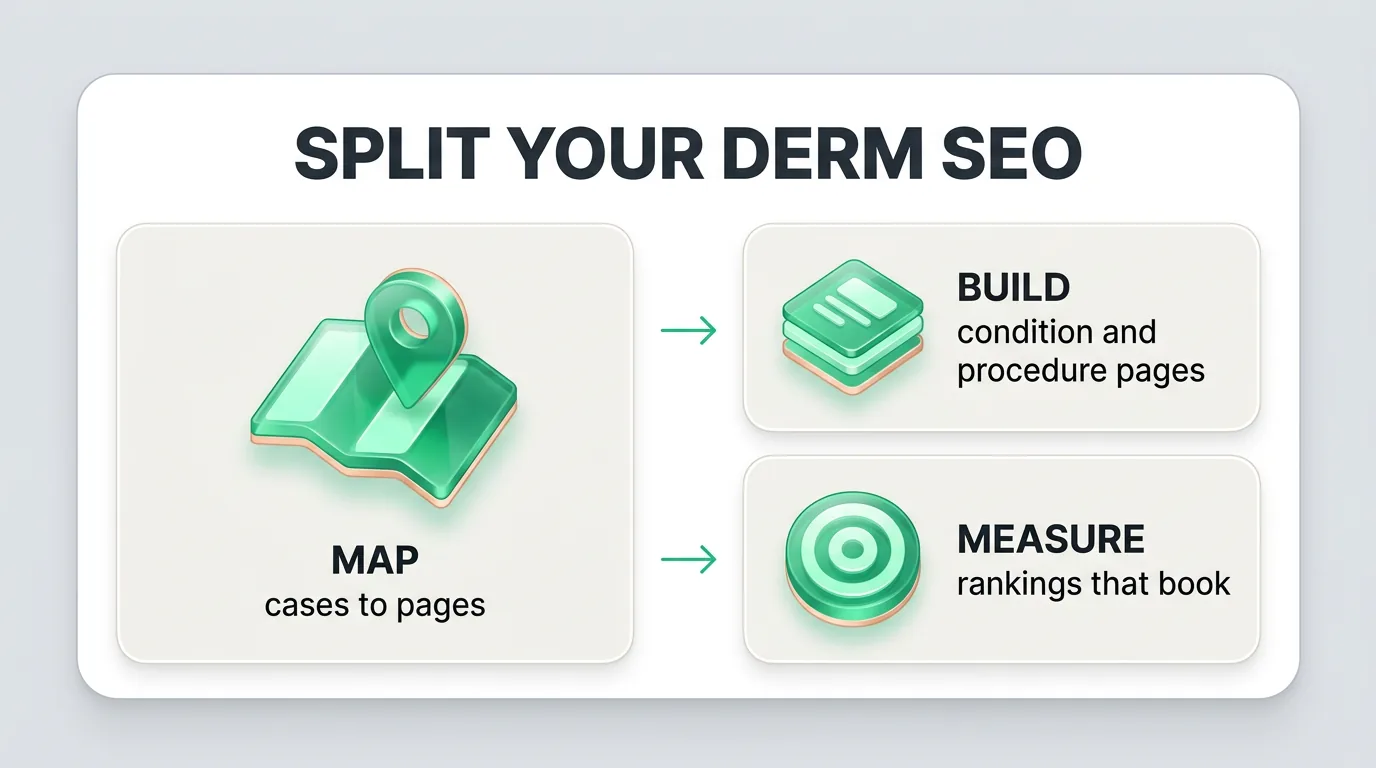
Useful dermatologist SEO starts with your production report, not a keyword tool. Pull the last six months. Mark the cases you want more of and the ones you would rather refer out. Every case you want earns a page of its own. That mapping sits under any dermatology SEO plan worth running, and it costs you one afternoon.
Two patients, nothing in common but your waiting room. One searches whether her plan covers a skin cancer screening. The other searches what a filler session runs and how long the bruising lasts.
A single page serving both answers neither. Keep the paths apart. Insurance-led pages name the condition, the referral route and what to bring. Cash-pay pages carry photos, recovery time and a consult request. The next step changes too: verify coverage on one side, book a consult on the other.
Lead with the side that has empty chairs. Open next quarter's schedule. If referrals fill your medical slots while cosmetic hours sit open, point the first wave of pages at the reflected, cash-pay procedures. Where the reverse holds, build the condition library first.
Most practices start both at once and finish neither. Choose one side, publish all of it, then move to the other. The first set keeps earning while you write the second.
A patient who has managed rosacea for a decade lands on your page and reads that rosacea is a chronic condition affecting the face. She knew that. She came to learn what you would do about it.
Write each page the way you talk in the room: what you examine at the first visit, which treatments you actually offer, what happens when the first one fails, how follow-up runs. One page per condition, with the condition in the title. Those pages earn the search, while your local search visibility for your office decides whether you appear on the map beside them.
In my clinic years our Mohs page carried no name. A patient told me at her consult that she nearly booked elsewhere, because nothing on the page said who would be holding the blade.
Put the treating clinician on the page. Full name, board certification, fellowship, and a plain line about how often they handle that case. Link it to a bio that matches word for word. Search engines weigh named authors and visible credentials on medical pages, and the patient reading at 10pm applies the same test with far less patience. A signed page earns belief that an unsigned one has to beg for.
A before-and-after pair persuades better than any paragraph you will write. It also carries a patient's face, which makes written consent the first step and not the last.
Get consent that names the use: website, social, print, with the right to withdraw. File it before the photo goes near a page. Shoot both frames the same way, same lighting, same angle, same distance, and label the clinician who treated the case along with the number of sessions. Skip the retouching. A gallery that looks edited loses the patient who came to compare honestly.
Count what happens after the click. Dermatologist SEO proves itself in three numbers that sit between a ranking and a signed plan:
Review them monthly, page by page. A psoriasis page pulling requests that never show tells you the page promises something your intake does not deliver. A page with few requests and a high signed rate deserves more of your attention, not less.
Organic work moves in quarters. The early signals surface in Search Console first: new queries landing on a condition page, impressions climbing before a single extra call arrives. Bookings follow later, and they follow unevenly across pages.
So watch the leading signals while the schedule catches up, and resist rewriting a page a few weeks after publishing it. What you can shorten is the lag on your side. An inquiry that arrives Friday evening and gets a reply Monday morning has usually been answered already, by the practice two streets over.
Split the work by case type, sign every page with the clinician who treats it, and measure the bookings rather than the rankings.
We review your pages, search visibility and enquiry path, then show you what to fix first.