

You sign with one person, then a stranger answers your emails by month two.
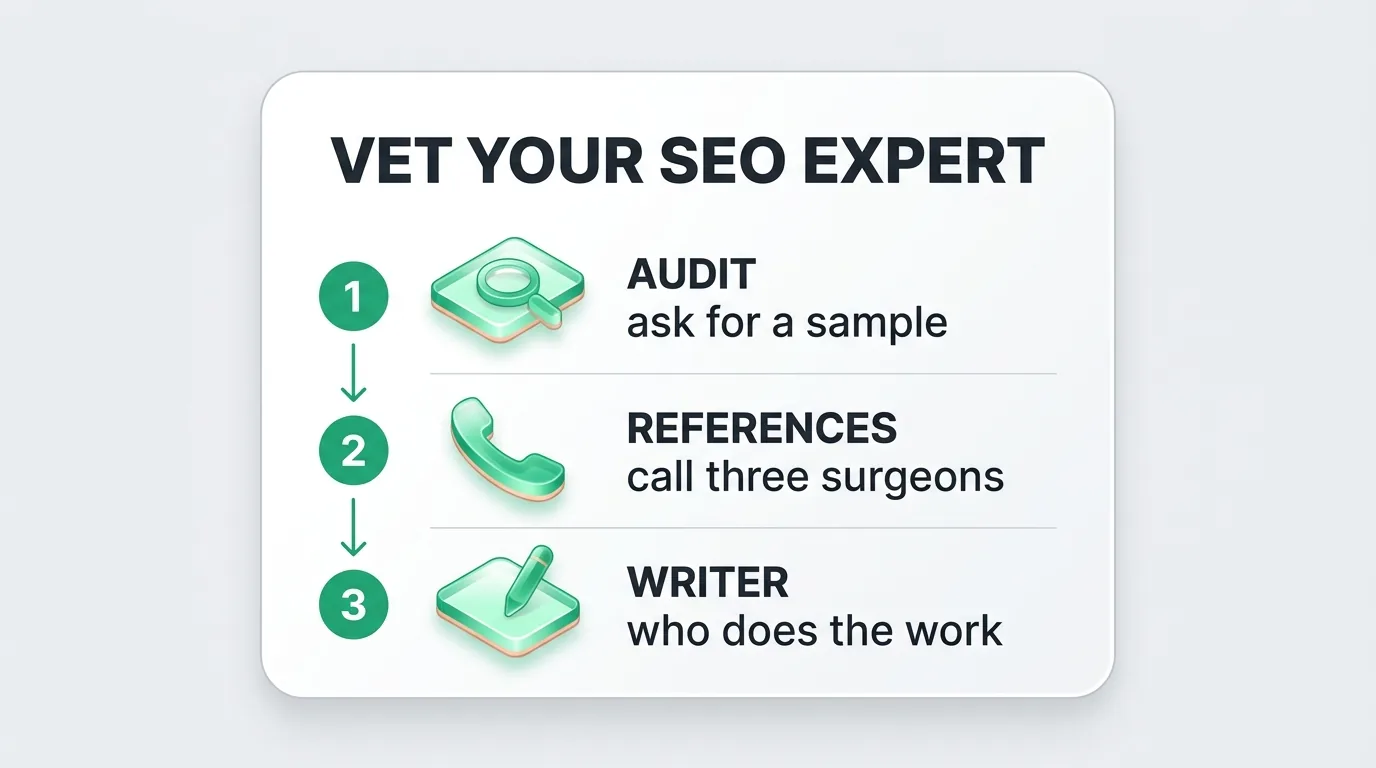
The surgeon whose name closed the deal often disappears into another account by month two, leaving a coordinator you have never met to run your galleries and consultation page. Ask who writes your copy and answers your emails before you sign, not after.
A generalist agency sends over a page on rhinoplasty. It names no technique, promises a result you would never put your name to, and reads like a brochure. You rewrite it yourself at 10pm.
That gap is the whole job. A plastic surgery SEO expert writes for a patient who has researched for eight months and will hold your page against four other surgeons, so the copy has to survive that comparison. Generalists optimize headings and stall the moment a sentence needs clinical accuracy. Anyone running your search presence should already know the fundamentals of plastic surgery SEO before touching a consultation page.
Your galleries convince patients faster than any paragraph, and they carry the most exposure on the site. A specialist asks for the signed consent before the image, captions results as individual outcomes rather than expectations, and names and compresses the files so photos load on a phone in a waiting room.
Galleries also need a home. Each set belongs on the page for the procedure it shows, which sits inside a broader procedure-level organic strategy rather than in one bulk album.
Ninety days buys diagnosis and foundations, not rankings. Elective procedures move on a slower cycle than that, and anyone promising top positions by month three is selling a timeline nobody controls.
Expect a crawl and content audit in the first weeks, then repair work on the pages that already earn impressions but no consultations. Around month two you sit for a recorded interview so your actual technique reaches the page. Ask upfront how the full scope of SEO services maps onto that calendar.
Case studies describe another surgeon's practice. A short audit of your own site describes yours, and it costs you an hour to read.
Name three pages for the candidate to review: your busiest procedure page, your consultation page, your homepage. A plastic surgery SEO expert comes back with specifics (a title tag competing with itself, a gallery buried three clicks deep, a form nobody completes on mobile). A generalist returns a checklist. Weigh what they found against the execution standards to expect, then ask what they would fix first and why.
Three references in markets like yours beat a page of testimonials. Ask for surgeons facing the same density of boards, a similar procedure mix, and the same advertising pressure from medspas.
Then ask them what stopped working. Plastic surgeon SEO references confirm the wins readily; the useful part is how the vendor behaved through a ranking drop or a quiet quarter. If you are weighing one person against a firm, the agency selection criteria differ enough to read separately.
You sign after two calls with the person whose name sits on the proposal. By month two your emails arrive from a coordinator you have never met, and the drafts come from a subcontractor who has never stood in an operating room.
So ask before you sign: who writes the copy, who pushes it live, who answers on a Friday when a gallery publishes with the wrong consent status? Get names and rough monthly hours in writing. A team can be the right answer, and profiles of specialist teams show how that work splits, but you need to know whose judgment carries your clinical claims.
Ownership decides what a vendor change costs you. When the domain, the content, and the accounts sit in your name, leaving is a transfer. When they do not, leaving is a rebuild.
Years ago at my own clinic, a vendor registered our domain inside their account to keep things simple. Moving away cost us six weeks we did not have.
Put it in the contract instead: domain, hosting, analytics property, Google accounts, photo library, and every page of copy, with you as primary admin. Plastic surgery website design and content produced on a retainer should transfer to you when the retainer ends. Advisory work sidesteps much of this, which is one reason the consultant engagement model suits practices with an internal marketing hire.
Every stalled engagement I have seen stalled in the same place: a folder of draft pages waiting on the surgeon. Nobody can describe your technique for you, and nobody else can approve a before and after.
So plan the input rather than discovering it. A few hours a month covers one recorded interview per procedure page, medical review of drafts, photo and consent approvals, and a named deputy who signs off during a full theatre week. Agree the turnaround window in the contract, and your plastic surgery marketing stops queueing behind your operating list.
Hire the person who will still be doing the work in month eight, then protect that choice in the contract.
We review your pages, search visibility and enquiry path, then show you what to fix first.
.svg)