Separate consultation offices, operating facilities and individual surgeon profiles before proposing listing or page changes.
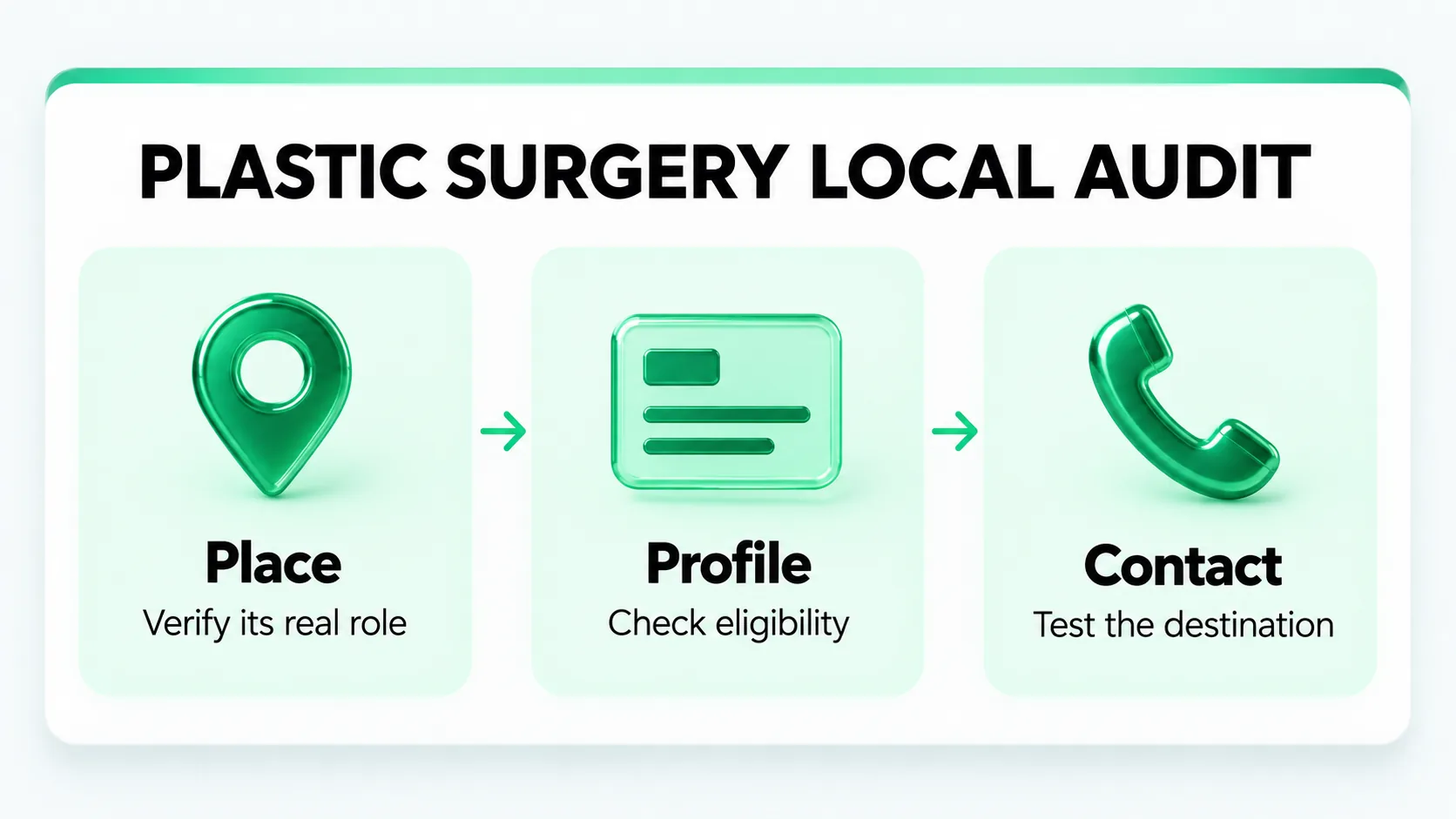
Local SEO for a plastic surgery practice starts with a practical question: where should someone go, and whom will they meet there? A consultation office, an operating facility and a surgeon's professional profile describe different things. The website and listings should make those relationships understandable.
This audit produces a location register, a profile decision and a list of corrections with owners. It fits within a wider plastic surgery marketing plan, especially when a practice has moved, added a surgeon or changed where consultations take place.
Start with the practice's current operating information. For each address, record its role, public name, telephone, consultation availability, providers and website destination. Ask the office team to confirm the details rather than copying a directory that may be out of date.
A surgeon may operate at a hospital or surgery center without running a separate consultation office there. Describe that relationship accurately when relevant to the patient journey. It does not, by itself, justify creating another practice listing or inviting visitors to arrive without instructions.
Illustrative location register: this fictional practice has two places where consultations occur and a separate facility relationship. These rows demonstrate the audit, not eligibility decisions for a real business.
| Place or profile | What to establish | Website or listing decision |
|---|---|---|
| Main consultation office | Current staffed address, public hours, telephone and attending surgeons. | Use a useful office page and verify the practice profile against Google's rules. |
| Second consultation office | Whether patients can actually attend, on which days and with whom. | Create or update its page only with distinct, verified information; assess profile eligibility separately. |
| Operating facility | Actual relationship, procedures performed there and patient instructions. | Explain the relationship where useful; do not label it a practice office without evidence. |
| Individual surgeon | Public-facing role, contactability and current professional details. | Check the individual-practitioner rules before proposing another profile. |
| Former address | Move date, old listings and links that still send people there. | Document the correction path; avoid deleting an active profile merely because names resemble each other. |
Google's business representation guidelines address real-world names, location eligibility and individual practitioners. Review the applicable section before creating or changing a profile. A rented address or a city the practice wants to reach is not evidence of an eligible office.
Record the proposed entity and the reason for the decision. For example: “Practice profile at the verified consultation office; individual surgeon profile needs eligibility review.” Keep unresolved items unresolved until the practice can provide the missing facts.
Choose the name and category that accurately represent the entity. Do not append procedure keywords to the business name merely to target searches. When a profile appears duplicated, first compare ownership, address, history and the entity represented. The appropriate correction depends on what the profiles actually describe.
A useful office page should answer where consultations occur, which surgeons attend, how to contact the team and what arrival details the office has confirmed. Link to relevant surgeon and procedure pages so visitors can continue without guessing.
For a second office, publish its actual differences. A different address alone may warrant practical location information, but it does not justify copying every procedure page with a city name changed. Google's doorway abuse guidance identifies similar regional pages that funnel visitors elsewhere as a problematic pattern.
Also reconcile the public facts across the sources patients use. Correct wrong phone numbers, obsolete addresses and misleading provider affiliations. Do not turn this into a claim that an abbreviation or punctuation difference automatically splits a business into separate entities in Google's systems.
Use a current surgeon biography and verify the exact certification described. The ABPS public lookup is an appropriate source for an ABPS certification statement. Record what was checked rather than treating a badge copied from an old directory as current proof.
Test the telephone link, form and booking destination for each office. The destination should identify the office or let the team route the request correctly. Check the confirmation message as well as the submit button. A functioning form that gives the wrong location still needs correction.
If reviews are part of the work, use a consistent process for authentic feedback. Google's contribution policy prohibits incentivized reviews and selective solicitation of positive feedback. An arbitrary monthly review quota is not an eligibility rule or a ranking promise. Consistent reputation management for doctors keeps feedback authentic and avoids incentivized or selectively solicited reviews.
Turn each issue into a short work item: observed problem, source of truth, proposed correction, account owner and acceptance check. The office manager can confirm opening hours; the clinician can confirm professional facts; the website and profile owners can implement the approved changes.
Use the same locations and date windows when reviewing performance. Google's local ranking guidance describes relevance, distance and prominence. A corrected profile can improve its accuracy, but it cannot make every searcher nearby or guarantee a local position.
Keep profile interactions separate from office outcomes. Google describes the Calls metric as clicks on the profile's call button, not completed consultations. The practice must review its own operational records to know what happened afterward. Clear plastic surgery SEO reporting separates profile clicks from actual consultations booked afterward.
To define the first set of office and listing corrections, request a free initial diagnostic. Ongoing plastic surgery SEO services can maintain these corrections across multiple office locations over time.