Choose the visitor task and the current owner page, then attach the facts and review responsibilities needed to complete it.
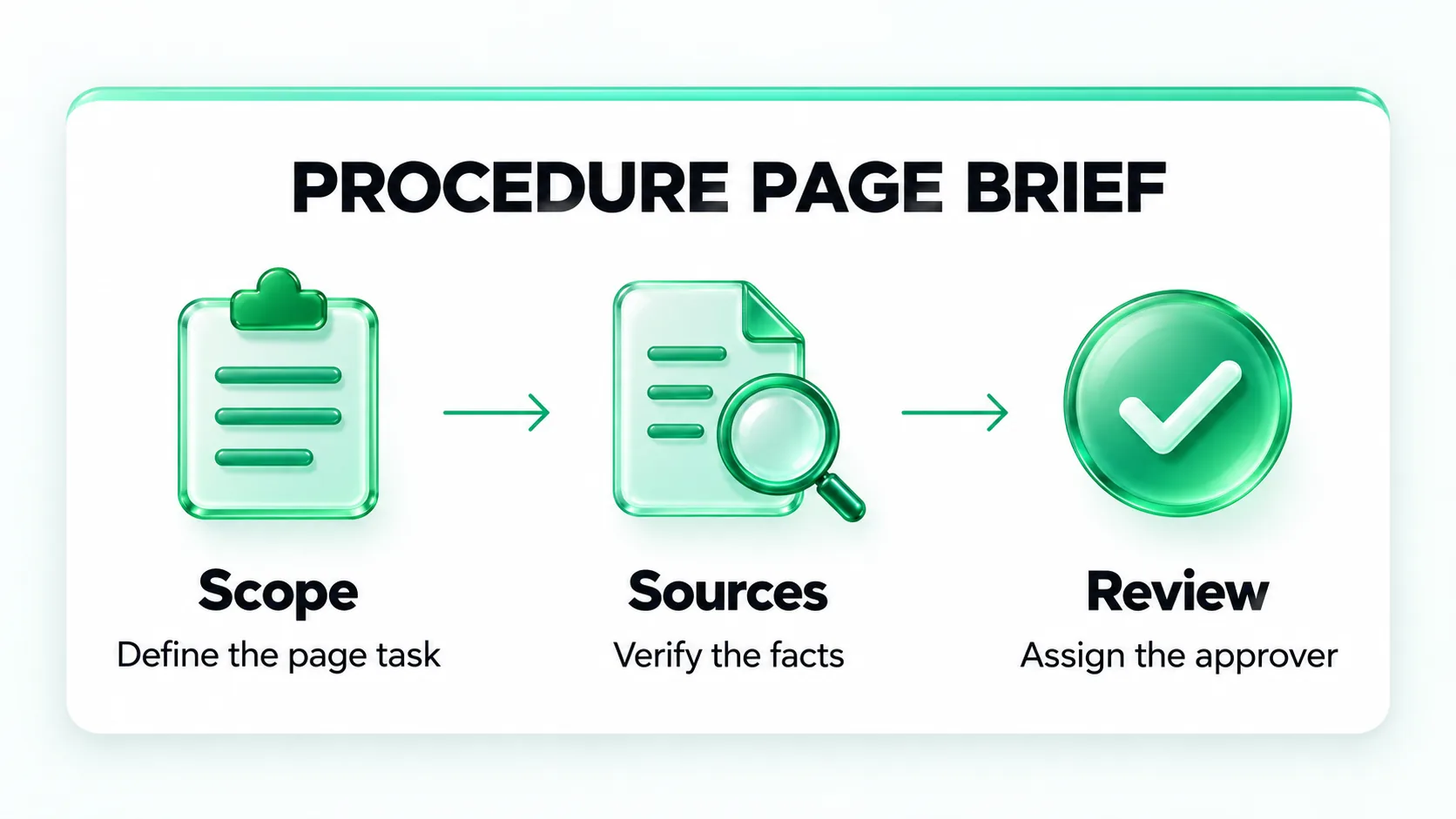
A useful cosmetic surgery SEO brief gives a writer more than a keyword and a word count. It identifies the procedure the practice actually offers, the question the page should answer, the clinician who will review it and the next step the office can support. That is the document to finish before drafting another procedure page. Our Plastic surgery SEO page covers the full approach.
Use this process for an existing page that needs a clearer purpose or for a genuine gap in the site. It produces a page brief, a source checklist and a release decision. For the wider channel and positioning decisions, start with plastic surgery marketing.
Write one sentence describing the visitor's task. For example: understand how this practice handles a rhinoplasty consultation and decide whether to contact its office. This is more specific than “rank for rhinoplasty” and gives the writer a useful boundary.
Confirm the actual procedure scope with the surgeon. Do not assume that every practice offers every operation in a keyword export. Likewise, cosmetic and reconstructive care should be described according to the services and questions involved. A shared term does not automatically require separate URLs, and including both contexts does not automatically prevent a page from ranking.
Review existing procedure, surgeon and location pages together. If one already serves the task, improve it first. A separate recovery article may be useful when it can answer a substantial, distinct question with clinical review. A short answer may belong on the procedure page instead.
Illustrative planning example: the following worksheet is for a fictional US practice revising an existing rhinoplasty page. It describes editorial work, not a clinical protocol or a client result.
| Brief field | Working instruction | Evidence or approval needed |
|---|---|---|
| Owner URL | Use the current procedure URL if it already serves this task. | Existing content, internal links, canonical and search data. |
| Visitor question | Explain the practice's consultation process and how to request it. | Current office process and the clinician's description. |
| Procedure scope | Describe what this surgeon offers without extending the scope. | Named surgeon approval of terminology and limitations. |
| Provider information | Name the surgeon and describe credentials precisely. | Current biography and verification of the stated certification. |
| Supporting material | Select relevant patient questions and approved images. | Source notes, clinical review and documented image permission. |
| Practical details | State where consultations occur and how the office handles requests. | Verified address, contact route and actual response process. |
| Acceptance check | Review the complete mobile page and the request confirmation. | Named reviewer, test record and resolved publication issues. |
Attach the source beside each instruction. “The surgeon knows this” is not a usable source record for a writer. A dated review note, approved biography or current office document lets the team resolve disagreements without repeatedly reconstructing the brief.
The marketing team can group reader questions, draft headings and make navigation clearer. The qualified clinical reviewer should approve explanations of the procedure, assessment, risks, alternatives, limitations and recovery information. Do not fill a missing answer with a competitor's wording or a generic AI completion.
Credentials deserve the same care. If the page states American Board of Plastic Surgery certification, check the ABPS verification tool and record the exact finding and date. The Board also distinguishes its certification lookup from verification of a state medical license. Name the credential actually verified.
Google's helpful content guidance supports writing for the audience and making sourcing and authorship clear. Use the review process to improve the page's accuracy and usefulness, rather than adding a decorative reviewer badge.
Build an image record with the approved file, depicted procedure, permitted placement and person responsible for approval. For before-and-after material, check the practice's permissions and presentation rules before the file reaches the CMS. Never substitute generated or stock imagery for a claimed patient result.
The ASPS Connect photo guide, which applies to its own platform, requires documented consent and matching procedure information. It is a useful reference for an asset checklist, not a blanket legal clearance for another website.
The contact section needs equally specific facts. State whether the request is for an office consultation or another type of appointment, where it occurs and what the team will do next. Publish a response-time promise only when the practice has agreed to it and can support it. A generic contact route can still be usable if its purpose and confirmation are clear.
Check the title, opening paragraph, headings, images and FAQ against the original task. Each should help the reader understand the service or take the next appropriate step. Remove sections added only to repeat a phrase.
The finished brief should let a writer proceed and a reviewer say precisely what is still missing. If you need help turning the current site into that work package, request a free initial diagnostic.
We review your pages, search visibility and enquiry path, then show you what to fix first.
.svg)