

A parent opens your site at night and the page freezes before calling.
A dead treatment page can keep sending calls to a line you disconnected months ago. The team you sponsor and the dentist who refers patients to you both carry real weight online, but almost nobody asks them for a mention.
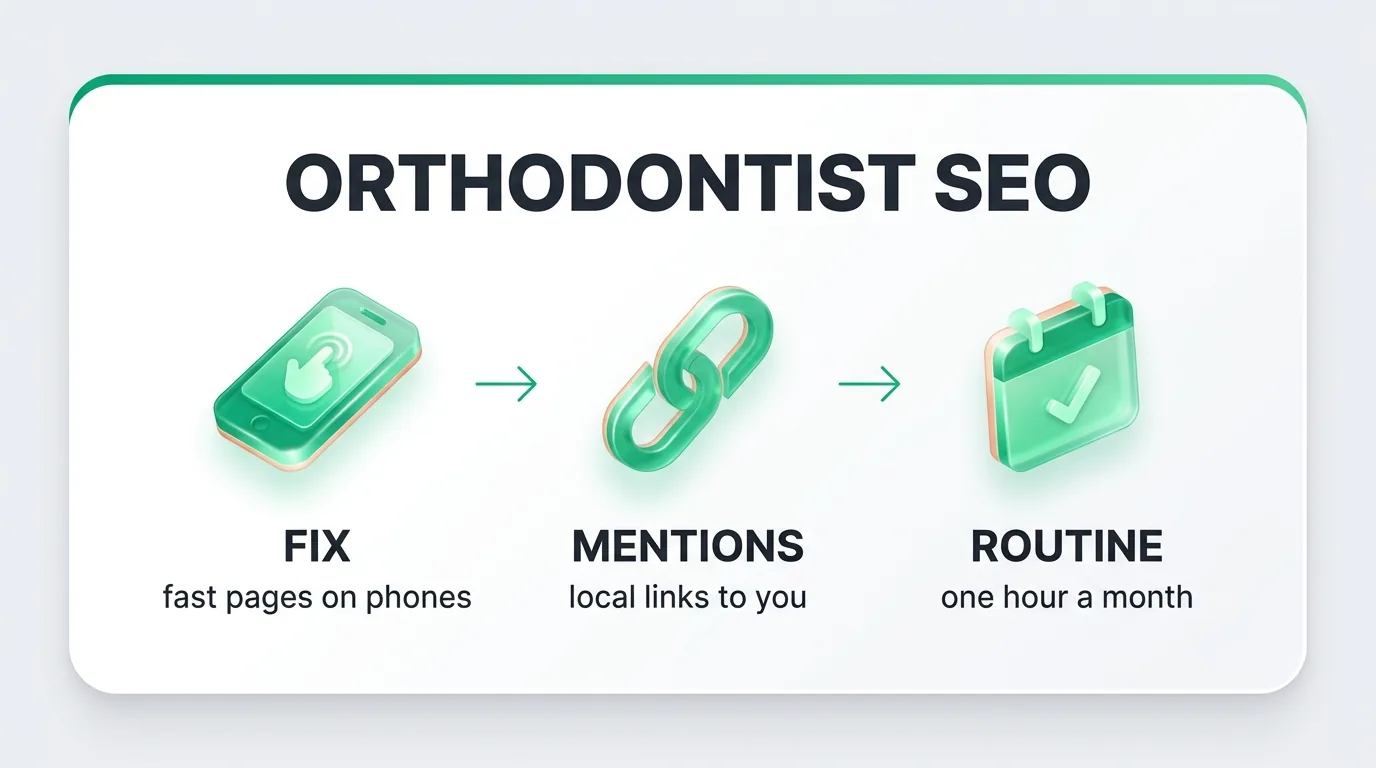
A mother opens your site at 9:40pm, once her son is asleep, ready to read about the braces her dentist mentioned in spring. The page stalls on her phone. She closes it and opens the next practice on the list.
That moment decides whether search engine optimization for orthodontists pays you back. Load speed and a thumb-sized consultation button move more consults than any new page you could publish this month. Test your three busiest pages on your own phone, on cellular data, not office wifi. If the number is not tappable and the form asks for nine fields, start there. Nobody taught you this during residency, which is why the orthodontic SEO service we run begins with the site you already own.
A page that tries to cover every treatment answers nobody. Decide what each one owes its reader: the question it settles, the patient it speaks to, the single action that closes it. An adult weighing aligners carries a different worry than a parent reading about her nine-year-old, so the headline, the photos and the call to action should differ too.
Then cut what competes. Two buttons, three phone numbers and a newsletter box split the attention the page just earned. How the full treatment set should be built, and how organic traffic turns into started cases, sits in its own guide.
When I rebuilt my own practice site, the retired braces page stayed live for months. Families kept landing on it and calling a line we had already dropped. Nobody noticed, because nobody was looking.
Sites edited for a decade collect debt: dead aligner URLs from a finished promotion, two versions of the same location page, a menu still pointing at an address that returns an error. Google splits credit between the duplicates and spends its crawls on your dead ends.
Export your page list once, then do three things: redirect every dead URL to its live replacement, keep one version of each duplicate and redirect the other, and repair the links in your menu and footer. It costs the least of anything here and most practices have never done it. Your local visibility around the practice leans on that one surviving location page as well.
You already sponsor the middle school team and hand out mouthguards every fall. Nobody ever asks for the link.
Mentions from your own town carry weight that no paid directory can match, and they are sitting there unclaimed. Ask the person who runs the page, by name, and send the exact URL you want used:
Which of these to chase first, and how many a year you need, belongs in a written ortho SEO plan.
A general dentist tells a family to see you. That evening the parents search your name, and the dentist's own site mentions nobody at all. The handoff now rests on memory.
Ask your referring dentists, pediatric colleagues and oral surgeons to name you on their referral page, with a link. Make it a two-minute favor: send one short paragraph and the URL, written so they can paste it and move on. How you describe yourself in that paragraph does real work, and specialist positioning online is worth a closer look before you send it.
One hour a month, booked on the same day, beats a frantic weekend twice a year. Most search engine optimization for orthodontists stalls for one plain reason: nobody owns it.
Name the person at the front desk and write the list down: submit the consult form from a phone, press the call button, fix whatever link broke since last month, refresh one treatment page with a recent case, and send two mention requests. Review it with your office manager each quarter. The full scope of ortho SEO work runs well past that hour, though the hour is what keeps a site from rotting.
Thursday, 4pm, a cancellation opens up. That gap is not when you learn how redirects work.
Keep in house what only your practice can supply: the patient photos, the answers you repeat in consults, the relationships with schools and referring offices. Hand off what needs tools and repetition, like technical cleanup, page builds and outreach. At that point choosing an SEO provider becomes its own decision, and the useful test is whether they can name what they will change in your first month.
Start with the site you already own, protect the monthly hour, and hand off the rest before it costs you chair time.
We review your pages, search visibility and enquiry path, then show you what to fix first.
.svg)