Use the service menu to define the scope, group queries by the reader’s task and improve the existing owner where it already fits. The examples are planning hypotheses, not measured local demand.
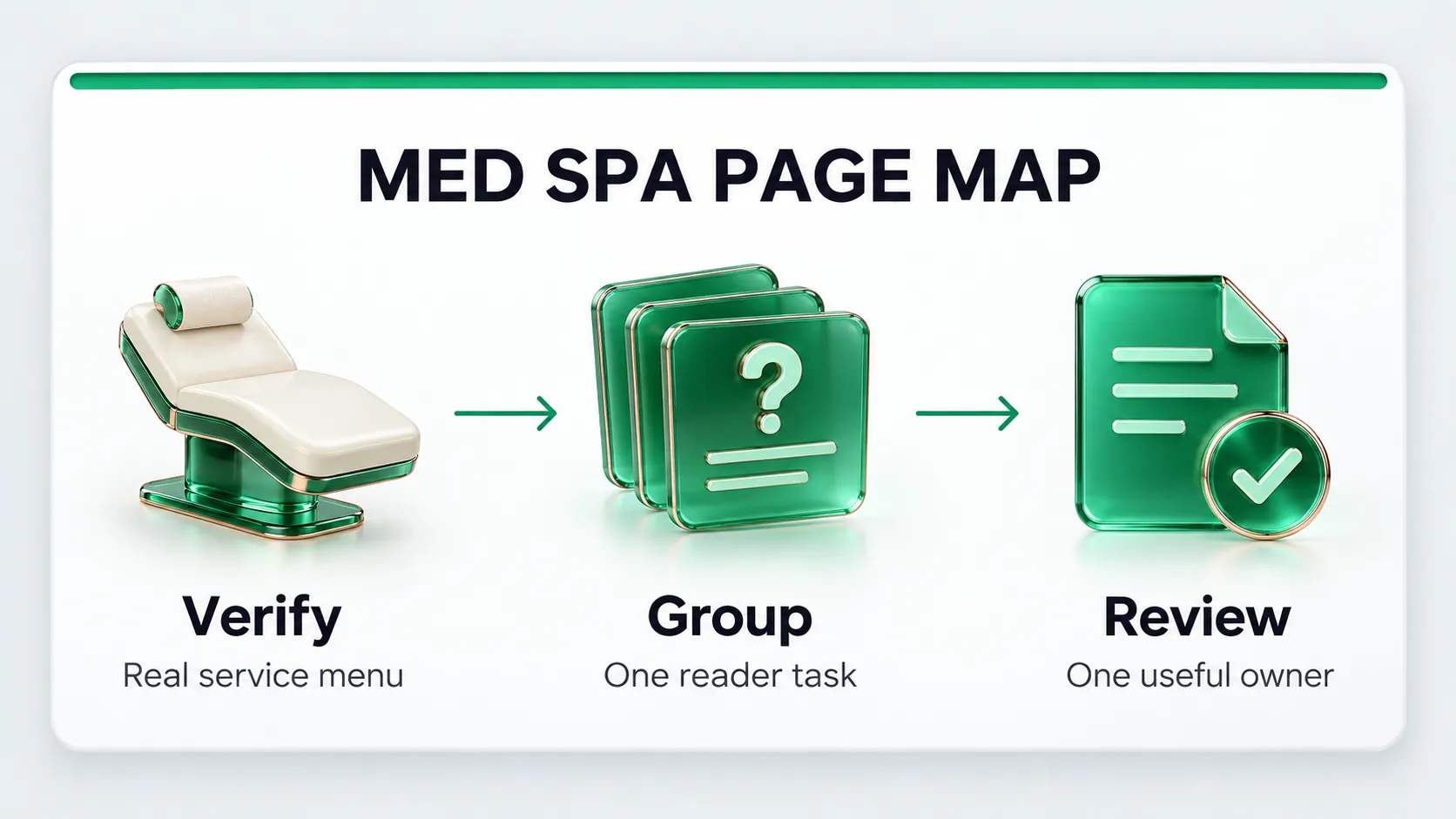
A med spa SEO keyword map connects a search question to a useful page on your own website. For an owner or marketing manager, the starting material is the actual treatment menu, the people responsible for it and the locations where it is available. A large keyword export cannot establish any of those facts.
Ask the operations lead for the current menu and the person responsible for clinical review to confirm its terminology. Record which services are available, which are paused and which require a consultation before any treatment decision. Keep product sales, professional training and employment opportunities separate from the appointment pathway. They serve different readers even when they contain the same treatment name.
This guide gives you a working page map and a repeatable brief. The examples are illustrative query hypotheses, not measured local demand or a list of treatments your business should offer. Replace them with your verified services before using the map. The same structured approach applies to broader medical SEO planning for a practice.
Group phrases by the decision the visitor is trying to make. Someone looking for the clinic’s address does not need a second treatment explainer. Someone comparing a consultation process needs more than a contact button. A page can answer several closely related questions when they lead to the same useful next step.
| Illustrative query | Main task | Candidate page owner | Information to verify |
|---|---|---|---|
| med spa in [city] | Find a relevant local provider | Location or main practice page | Real location, service scope and contact route |
| laser hair removal [city] | Check a specific service | Existing service page, if actually offered | Provider-reviewed description and where it is available |
| skin consultation [city] | Understand the first visit | Consultation page or service-page section | Actual process, responsible professional and booking route |
| [service] cost [city] | Understand fees and inclusions | Pricing section on the relevant service page | Approved fees, what is included and what remains individual |
| [practice name] providers | Identify the team | Team overview and relevant biographies | Names, roles, credentials and current responsibilities |
| [practice name] parking | Prepare for a visit | Location page | Entrance, access and parking information |
| [service] aftercare | Find care instructions | Clinician-approved information or the existing patient system | Which instructions can be public and who maintains them |
The bracketed terms are worksheet variables. They are not titles to publish unchanged. A service page may cover its location, consultation and pricing questions together. Create a separate page only when you can explain the different reader task and supply enough useful, verified information to complete it.
List the current URLs beside the grouped queries. Open each page and record whether it already answers the task, needs improvement or points to the wrong destination. Treat a phrase such as “medical spa” as a possible wording variation first, not an automatic reason to duplicate your “med spa” page.
For example, imagine an existing hair-removal page explains the service but omits the actual office and consultation route. The next task could be to improve that page. Creating a new city variant with the same explanation would leave two owners to maintain without solving the missing-information problem. This is an editorial decision about usefulness, not a claim that every similar phrase must have one URL. Confirm the office address and hours match the current Google Business Profile before publishing the page.
Google’s people-first content guidance asks whether a page contributes original value and helps its intended reader. Apply that test to the proposed addition: what can the visitor do or understand afterward that the existing page does not support?
Use one row per proposed owner. The brief should be specific enough that the writer knows what to include and the reviewer knows what they are accepting. An empty evidence cell means more preparation is needed; it is not an invitation to invent a credential, treatment outcome or price.
| Brief field | What to record | Acceptance question |
|---|---|---|
| Service and audience | Verified service; prospective visitor, existing patient or another reader | Is this what the business actually provides to this reader? |
| Query group and owner | Primary task, related questions and one URL | Does an existing page already own the task? |
| Scope and exclusions | Topics to answer and topics belonging elsewhere | Will this page drift into treatment advice or duplicate another owner? |
| Evidence and reviewer | Current documents, approved wording and responsible person | Can each factual statement be checked? |
| Next step | Correct consultation, information or contact destination | Does the destination work for this service and location? |
| Release check | Mobile review, title, links, source date and named approval | Can the team identify the exact version accepted? |
Draft the page in the order of the visitor’s decision: establish the actual offering, identify the responsible provider and location, answer the relevant practical questions, then explain the next step. Medical explanations, limitations and aftercare require the responsible clinical reviewer. A marketing keyword does not settle suitability for an individual.
When you add research, save the provider, country or local market, language, date and settings. Keep provider estimates separate from your own Search Console observations. A national estimate does not tell you how many people in the clinic’s catchment area will request a consultation.
Review results for the actual query and market before choosing the page format. A results page dominated by service providers supports a different decision from one dominated by explanations. The result type informs the brief; copying a competitor’s headings does not establish your own service facts.
Where evidence is unavailable, write “not measured” in the working map. Prioritize a page because the service matters, the reader task is clear and the business can support the content. Save the uncertainty so a later reviewer can distinguish a researched opportunity from an editorial hypothesis.
Begin with one service area that the team can review properly. Connect its service information to the applicable provider, location and contact route. Use descriptive anchors and ordinary links, consistent with Google’s link guidance. Check the destination rather than assuming a planned URL exists.
The first useful outcome is a page set your team can maintain and explain. Search visibility and qualified inquiries need subsequent observation. For help turning the map into an agreed work package, explore Forge’s med spa marketing approach or request a free diagnostic. A short checklist for choosing a healthcare marketing agency can help before you commit to this work.