What a medical spa SEO company actually handles
The work that shows up on your calendar, month by month
Your monthly report lands on a Tuesday and you open it between two consults. Rankings moved. The calendar looks the same.
A medical spa SEO company should run a cycle you can see on that calendar: treatment pages rebuilt around what patients type before booking, technical repairs on a slow site, a steady flow of new reviews, and content that answers the questions you hear in the room. That repeating cycle is what MedSpa SEO services cover month after month. Ask any provider to name what ships in month one and what ships in month four. A vague answer there predicts a vague year.
Who actually touches your account after the sales call
The strategist who won you over on the call rarely writes a word of your site.
Ask for names and hours. Who writes the copy, who touches the code, who answers on a Friday when a bad review lands, and how much of it runs through an unedited AI draft. A small senior team often beats a large one here, and working with an SEO consultant is a different trade-off worth understanding before you commit.
Then ask what reaches your inbox: one named contact, a monthly call, and a written scope of deliverables for medical spas you can hold them to.
Vet the shortlist before you sign
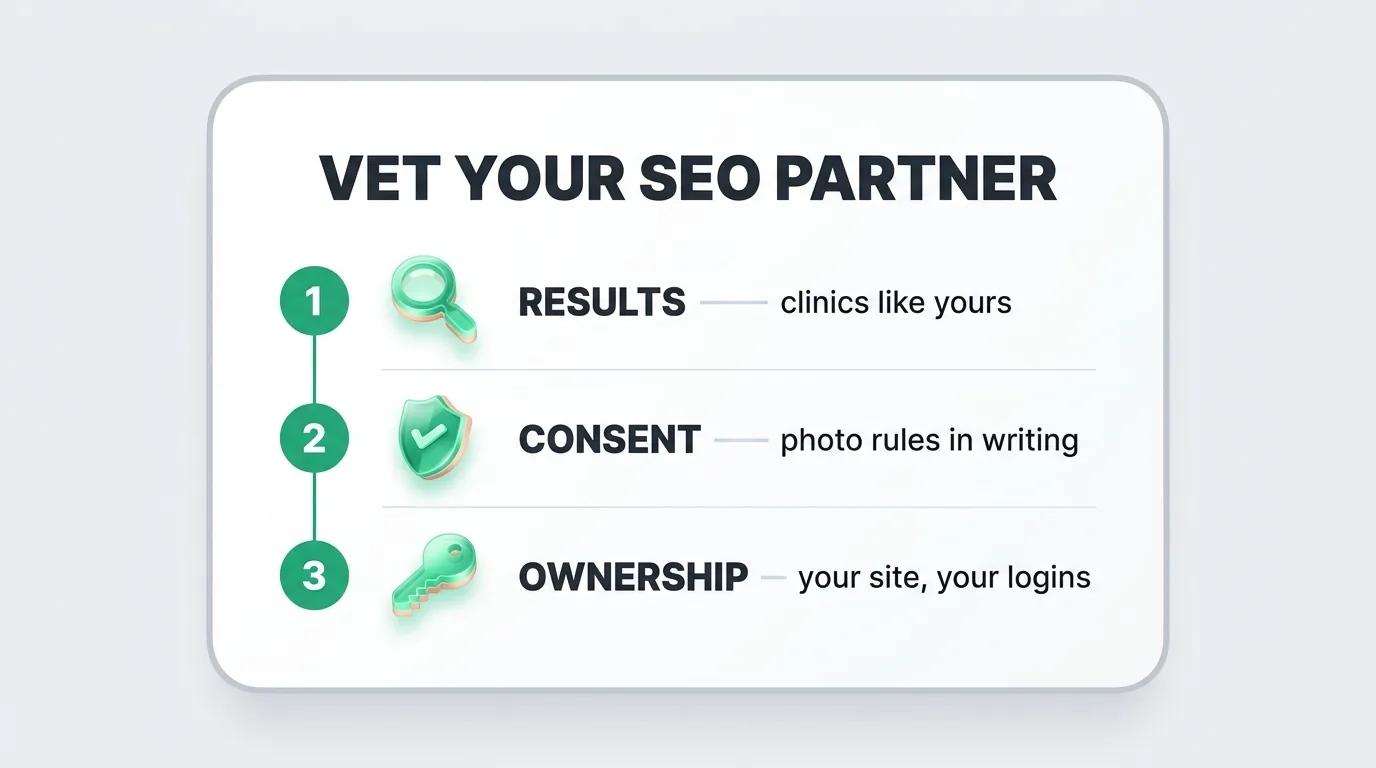
Check results from clinics that look like yours
Case studies age badly, and most of them describe a clinic nothing like yours.
A single injector in a suburb and an eight-room aesthetic center downtown chase different searches and convert at different speeds. Ask for two current clients with your treatment mix and your market size, then ask to speak with them. Review pages and Reddit threads tell you whether a medical spa SEO company is legit. A fifteen-minute call with a client who has paid them for a year tells you whether the work holds. Ranked shortlists are a separate exercise, and choosing among medspa SEO companies is where that comparison belongs.
Ask how they handle before and after photos and treatment claims
Years ago a provider of mine published a before and after set I had never cleared with the patient. She saw it on a Sunday and called the front desk. I pulled the page down that evening, and the trust took longer to repair than the page did.
Ask the company for their consent process in writing: a photo release that names web and social use, unretouched images, and results-vary language on every gallery. Ask who reviews treatment claims before publication. Copy written by someone who has never worked a treatment room drifts toward promises your clinical judgment would never make, and the regulator writes to your licence, not to their retainer.
Find out who else in your market they already work with
A patient in your town searches for skin resurfacing and sees three clinics above the fold. Two of them can be run by the same SEO team.
Specialization cuts both ways. A company that serves only med spas may already optimize the clinic two miles from you, which caps what they can do for you and tells you nothing about who gets the better idea first. Ask for the list of clients inside your radius, and ask for exclusivity in writing: a defined distance, a defined treatment set, and what happens when your competitor calls them next quarter. Some companies hold one clinic per market. Others will take the street.
Terms that protect the practice you built
Keep ownership of the site, the content, and the logins
A patient reads the page your provider wrote, books a consult and signs for a package. That page now earns for you every month. Check whose name sits on it.
Domain, hosting, CMS, analytics, Search Console and your Google Business Profile should all live in accounts you own, with the company added as a user you can remove on a Tuesday afternoon. Profile access matters because the same login drives local SEO for med spas, and losing it costs you weeks. Rented page builders and licensed content hide the trap: read what happens to the words when the invoice stops.
Agree on reports that track booked consults, not just rankings
Rankings feel like progress because they move fast. They also move without a single patient booking.
Pay for the number that fills chairs: consults booked from organic search, consults kept, and treatment plans signed. Insist on call tracking with recorded lines, form tracking, and a monthly figure your front desk can confirm against the schedule. Keep rankings and traffic in the report as early signals, and read them that way. How that reporting sits inside a retainer is its own question, and med spa SEO packages lay out the usual structures.
Know what the first ninety days should show
Month one goes to groundwork: crawl issues, page structure, tracking installed, profile cleaned up. Most engagements open with a med spa SEO audit, and you should read it rather than file it.
By day ninety, expect shipped pages you can click, impressions and calls trending up, and a tracking setup that survives a spot check. Signed treatment plans lag behind that, often by another quarter, because a patient weighing a course of body contouring takes weeks to decide. Set a ninety-day review with named criteria and a short notice period. A company confident in the work agrees to both.
Pick the provider whose answers stay specific under pressure, then write those answers into the agreement before you sign anything.