.svg)

What if every ad you run quietly turned into booked visits instead of dead clicks?
This guide shows how to link Google, social media, email, texts, and simple videos so each message nudges people one step closer to scheduling. Small monthly tweaks like stronger local search, clearer offers, and better follow up can fill your calendar without heavy discounting.
✔ Fully fill out and refresh your Google Business Profile with photos, services, hours, and replies to reviews
✔ Match each ad to one clear offer, one service, and one easy next step to book
✔ Set simple email or text follow ups after inquiries and visits so no lead is forgotten
Pick one of these steps and put it in place this week so your marketing starts working like a steady booking engine, not a guessing game.
If your med spa ads are not filling your calendar, the problem is rarely a lack of effort.
It is usually a strategy that attracts attention but never turns it into real visits.
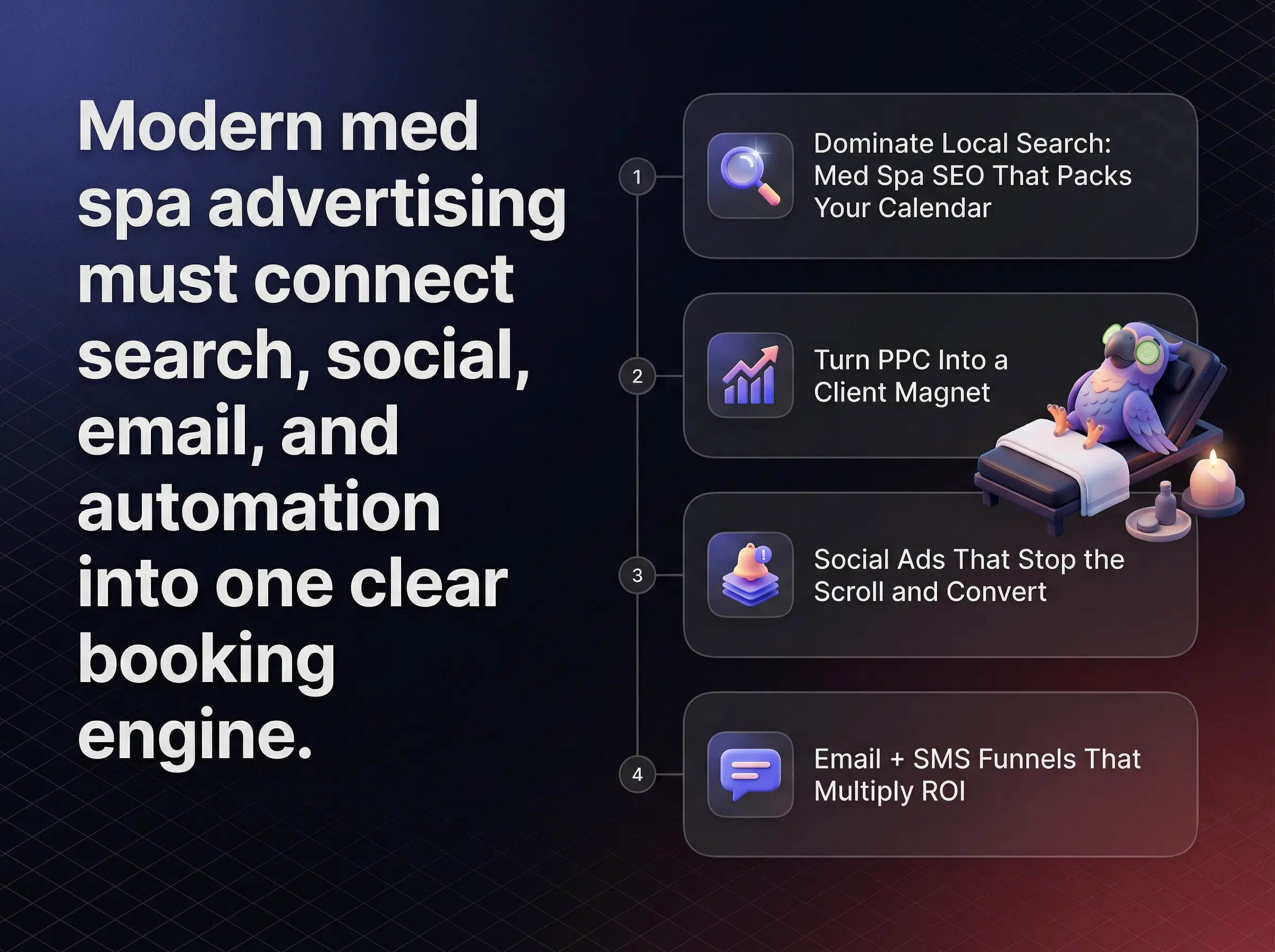
Modern med spa advertising must connect search, social, email, and automation into one clear booking engine.
When each touchpoint works together, every impression has a job and every click has a next step.
This guide shows how to build that system so your campaigns start to feel predictable instead of random.
You see competitors booked out for weeks while your treatments still have open slots.
Leads ask questions, price check, then disappear without rebooking.
Your team feels pressure to discount just to get quick wins, which quietly erodes margins and brand value.
The reality is that most med spa ads are built to look attractive, not to convert with intent.
They speak in general promises instead of location, timing, expertise, and proof that reduce risk in a prospect’s mind.
When campaigns ignore what real clients worry about, those clients keep scrolling or keep searching.
The most effective approach treats every channel as a coordinated pathway to one outcome.
Someone discovers you in local search, sees social proof in their feed, receives a reminder by email or SMS, and finally books from a clear and simple offer.
This is the structure that turns marketing from a cost into a measurable acquisition system.
Every impression should move a potential client one clear step closer to booking.
As you read each section, look for one idea that can be applied this week.
A recommended approach for healthcare business leaders is to test one improvement per month, then protect any change that increases booked appointments or revenue per visit.
Small consistent upgrades to your med spa advertising can outperform one big campaign that fades after a season.
Your next best client is already searching for you.
The question is whether your med spa appears first or disappears behind competitors.
Local SEO is not about vanity rankings.
It is about filling your schedule with nearby clients who are actively ready to book.
When your presence in Google feels complete, consistent, and trusted, those searchers stop comparing and start contacting you.
Many med spas rely on a pretty website but ignore the local signals Google cares about most.
Profiles are half filled, categories are vague, addresses differ across directories, and reviews sit unanswered.
The result is lost calls, lower map visibility, and searchers who assume another clinic is more established.
The truth is that your Google Business Profile can become a second homepage that converts faster than your actual site.
Complete every field with accurate services, locations, and hours, then keep it alive with weekly photos and fresh offers.
Encourage satisfied clients to mention specific treatments and your city name in reviews, which boosts both relevance and trust.
A powerful move is to treat your Q and A section as a mini FAQ that sells for you.
Add real questions clients ask about pricing, safety, and downtime, then answer with clarity and a soft invitation to book.
Pin a top question that speaks directly to high intent visitors such as how to schedule a same week consultation.
First, secure full access to your profile so your team can update it quickly.
Choose precise categories that match your highest value services instead of generic terms that dilute your relevance.
Align your description with those services and with the key phrases local clients already use when searching.
Upload new imagery on a regular schedule and prioritize bright, consistent lighting that showcases real spaces and outcomes.
Feature treatment rooms, reception, and subtle before and after results that fit your compliance standards.
This visual consistency increases trust long before someone arrives in person.
Ask for reviews right after positive visits while the experience is fresh.
Respond to every review with gratitude and a short reminder of how to book again.
This small step signals active management and reassures first time visitors who are scanning feedback quickly.
Local search power does not stop at your profile.
Your website must repeatedly confirm where you operate and which neighborhoods you serve.
Otherwise, search engines and humans treat you as generic and easy to overlook.
Integrate city, region, and landmark phrases in headings, introductory paragraphs, meta descriptions, and FAQs.
Connect before and after galleries to specific service pages and mention the general area where clients are based when appropriate and compliant.
Use structured data so search engines can clearly understand your business type and location.
Consider creating focused location pages for key suburbs or districts where your ideal clients live.
Highlight travel time, parking details, and local context that makes a visit feel easy rather than stressful.
These subtle touches can turn searchers who feel uncertain into visitors who feel prepared.
Which single page on your site, if better localized this month, could make the biggest impact on bookings from search?
Paid search can quietly become your most reliable growth channel or your most expensive mistake.
The difference is how precisely you target intent and how carefully you follow through.
Clicks from Google and other platforms are not the goal.
Booked and kept appointments are the outcome that proves your PPC strategy is working.
To reach that point, your campaigns must speak directly to what a motivated client wants at the exact moment of search.
Many med spa ads chase broad cosmetic or wellness keywords that attract unqualified traffic.
This drives up cost per click while starving your budget for the few phrases that consistently convert.
The emotional result is frustration and the belief that PPC does not work for your market.
In reality, a focused keyword strategy reduces waste and raises your close rate.
Target service specific phrases that clearly signal intent to schedule such as consultation terms or near me variations.
Match your ad copy and landing page to that intent with aligned headlines, pricing context, and an obvious next step.
Start by grouping keywords by service and by stage of decision making.
Protect budget for those with proven conversion history even if they cost slightly more per click.
Use clear language in your ads that states who the service is for, what result they can expect, and how quickly they can get started.
A strong structure is to open with the main benefit, confirm the location, then invite a direct action.
For example, highlight same week availability, package savings, or specialized technology that few competitors offer.
Keep every call to action specific, such as reserve a consultation this week, rather than vague learn more prompts.
Most visitors will not book on their first click, especially for higher ticket treatments.
Retargeting allows you to stay visible while they compare options and build trust.
Done correctly, this second and third touch turns initial curiosity into commitment.
Design display creatives that mirror the service pages visitors viewed.
Include testimonials and subtle before and after visuals where compliant, paired with a short line that counters the main objection.
Use time bound offers or limited consultation slots to encourage decisive action without resorting to constant discounting.
Which group matters most to bring back first, those who viewed pricing, those who started a form, or those who booked a consult but did not show?
In busy feeds, your med spa ads compete with friends, creators, and every other brand.
To win attention, your content must feel human, specific, and immediately relevant.
Short form video now shapes how clients discover treatments, compare environments, and judge credibility.
If your social presence shows only static graphics, prospects may assume your clinic is less active or less in demand.
Dynamic, clear, and educational clips can reverse that perception in seconds.
Focus each video on a single outcome such as smoother skin, more definition, or a calmer experience.
Open with an eye catching visual or question that mirrors the viewer’s concern.
Then show either a quick transformation sequence, a provider explaining a key step, or a client friendly snapshot of the process.
Keep captions concise and benefit focused, and always include a direct call to book a consult or claim a limited offer.
Test on screen text that includes your city name so viewers instantly understand this is local and accessible.
Repost top performers across platforms to maximize learning and reach.
Lead form ads shorten the gap between curiosity and contact.
When basic information auto loads, prospects can request details or a call in seconds rather than minutes.
That small reduction in friction often doubles your response volume.
Set your targeting radius around your most profitable neighborhoods.
Align ad copy with nearby landmarks or community references that show you understand the local context.
Limit form fields to the minimum data your team needs to respond quickly, usually name, contact, preferred service, and time frame.
What offer could you promote this month that would feel valuable enough for someone to share their details without hesitation?
Every unbooked lead is not a loss.
It is often a delayed yes that needs the right touch at the right moment.
Email and SMS give you permission to stay present without relying on algorithms.
Used with care and relevance, these channels can reactivate old inquiries, increase repeat visits, and raise average spend per client.
Map communication journeys around key milestones such as first inquiry, first visit, and time since last appointment.
Send a timely confirmation, a welcome overview of what to expect, then follow with education that answers common questions.
For no shows, create a gentle recovery series that offers flexible rescheduling and reduces guilt or friction.
Post treatment check ins can include care tips, normal expectations, and a soft suggestion of when to plan the next visit.
Automation platforms like Klaviyo or ActiveCampaign can trigger these flows based on events so your team does not rely on manual follow up.
Consistency here protects both experience and revenue.
Strategic timing often matters more than size of discount.
Soon after a positive treatment, clients are most open to complementary services or booster sessions.
Holidays create natural moments for self care or gifting focused promotions.
Structure campaigns that bundle related services with a clear value narrative, not just a percentage off.
Explain how the combination supports a specific goal, such as preparing for a season or event.
Align SMS for urgency and email for detail so both channels work together.
Which segment of your list would respond best right now, recent first timers, long term loyal clients, or those who have been inactive for 6 months?
AI is not just a trend word in healthcare marketing.
Used correctly, it becomes a quiet engine that protects your budget and personalization at scale.
Behavior based scoring can estimate how close a prospect is to booking.
Signals include pages visited, time on site, repeat visits, and engagement with emails or chats.
Tools that analyze this data can flag high intent leads so your team focuses outreach where it matters most.
When patterns show that certain paths almost always lead to bookings, you can invest more in the campaigns that create those paths.
This turns guesswork into a more reliable and scalable process.
Dynamic ads on Google and Meta can adapt creative based on which services someone viewed.
If a visitor studied a specific treatment page, your follow up ads should highlight that exact service with localized copy.
Align messaging with where they are in the decision journey, from curiosity to ready to schedule.
Over time, this level of relevance raises click through rates and lowers wasted impressions.
It also signals to clients that you pay attention and understand what they care about.
What is one simple rule you could set today to show different ads to past visitors based on their most viewed service?
Prospects may admire your branding, but they trust other clients.
Real results and real voices reduce risk faster than any tagline.
Before and after visuals should follow clear consent, privacy, and platform guidelines.
Use consistent framing, angles, and lighting so the transformation feels honest and comparable.
Avoid extreme claims and instead focus on realistic improvements that align with your typical outcomes.
Embed these visuals into carousels on your site and social ads where appropriate.
Pair them with short captions that clarify the treatment, time frame, and who may be a good candidate.
Transparency builds confidence even among cautious prospects.
Invite happy clients to share short written or video feedback that describes their experience in everyday language.
Provide simple prompts so testimonials speak to comfort, professionalism, and results instead of only saying it was great.
Use review platform integrations to display average ratings where prospects make decisions.
On social and display ads, overlay short quotes and visible stars on real photos when allowed.
This creates instant trust cues for people who skim and decide quickly.
Which treatment would benefit most from one strong, story driven testimonial added to its main landing page?
Urgency moves people from someday to now.
Handled with integrity, it helps clients act on goals they already have.
Short windows and clear limits signal that attention matters.
Use countdown overlays in ad creative and simple timers on landing pages for special campaigns.
Pair this with honest scarcity such as specific appointment slots or package quantities.
Keep language firm but respectful.
Explain what happens when the offer ends so prospects understand the real decision trade off.
Seasonal bundles give clients a curated path instead of endless choices.
Packages such as a summer preparation series or a holiday refresh collection can feel exciting and purposeful.
Clarify value by comparing bundle pricing and benefits with booking services separately.
Feature visuals that match the season and desired outcome.
Use captions that emphasize exclusivity and a specific time frame, not permanent discounts.
What upcoming season or local event could anchor your next compelling bundle so it feels timely rather than generic?
Without clear tracking, even strong campaigns become guesswork.
With accurate data, you can stop what is not working and scale what is.
Many high intent prospects call instead of filling forms.
Call tracking solutions such as CallRail or Ringba help you see which campaigns triggered those calls.
Combined with pixels from Meta, Google, and your email platform, you gain a view of the entire journey.
Configure conversions that reflect real outcomes such as booked consultations, completed visits, and package purchases.
This gives platforms the right signals to find more of the clients you value most.
Review performance at least monthly and group data by service, keyword, and location.
Reduce bids or pause terms that attract traffic but rarely lead to revenue.
Shift those funds into combinations of keyword and geography that produce profitable appointments.
Create a simple routine where your team checks search terms, negative keywords, and ad variations on a schedule.
This habit prevents wasted spend from quietly growing over time.
Which one metric, if monitored every week, would give you the clearest signal that your med spa ads are moving in the right direction?
Clients do not just choose a treatment.
They choose an environment where they feel comfortable and understood.
Use Stories to guide viewers through the experience before they arrive.
Start at the entrance, show reception, then share quick glimpses of treatment rooms and calming details.
Include clear text prompts that point to the native book button.
Save the best sequences as highlights organized by service or theme.
This allows new visitors to self tour on their own time.
Short introduction clips from team members reduce anxiety about meeting someone new.
Provide simple scripts that cover name, role, one common client question, and what they enjoy about helping clients reach their goals.
Record in natural light and calm settings to reflect the in clinic experience.
Repurpose these clips across Reels, TikTok, your website, and nurturing emails.
Familiar faces create a sense of continuity from first impression to first visit.
Which part of your client journey, if shown in a 30 second walkthrough, would remove the most uncertainty and encourage more first time bookings?
Putting these med spa advertising strategies into action can change how every impression performs.
With intentional search, social, automation, and tracking, your calendar can shift from sporadic bookings to steady, predictable demand.
The next step is to choose one improvement to implement now and protect the results as you build the rest.
Apply these med spa ads now to fill your schedule, cut CAC, and turn first-time visitors into loyal, repeat clients.
.png)
I now help healthcare providers build predictable patient acquisition systems.
I write about healthcare growth, high-value patient funnels, and what actually works in today’s digital landscape.
Follow me👇

.svg)