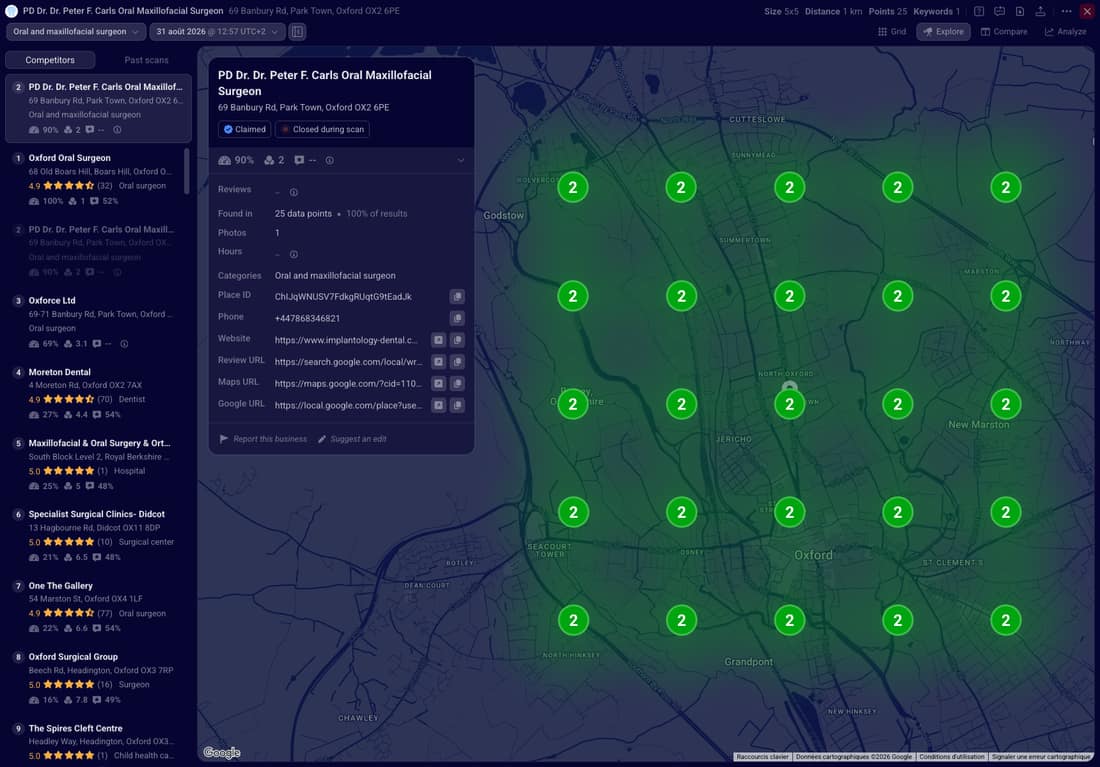
We ran the same search for an oral and maxillofacial surgeon from 25 spots around Banbury Rd in Oxford. It shows you among the first three almost everywhere. That is a strong local presence. Each dot is one of those spots; Green means the practice is in the top three there.
So when someone nearby searches from around here, they are likely to come across you. That presence is worth protecting. A nearby practice shows what that can look like.
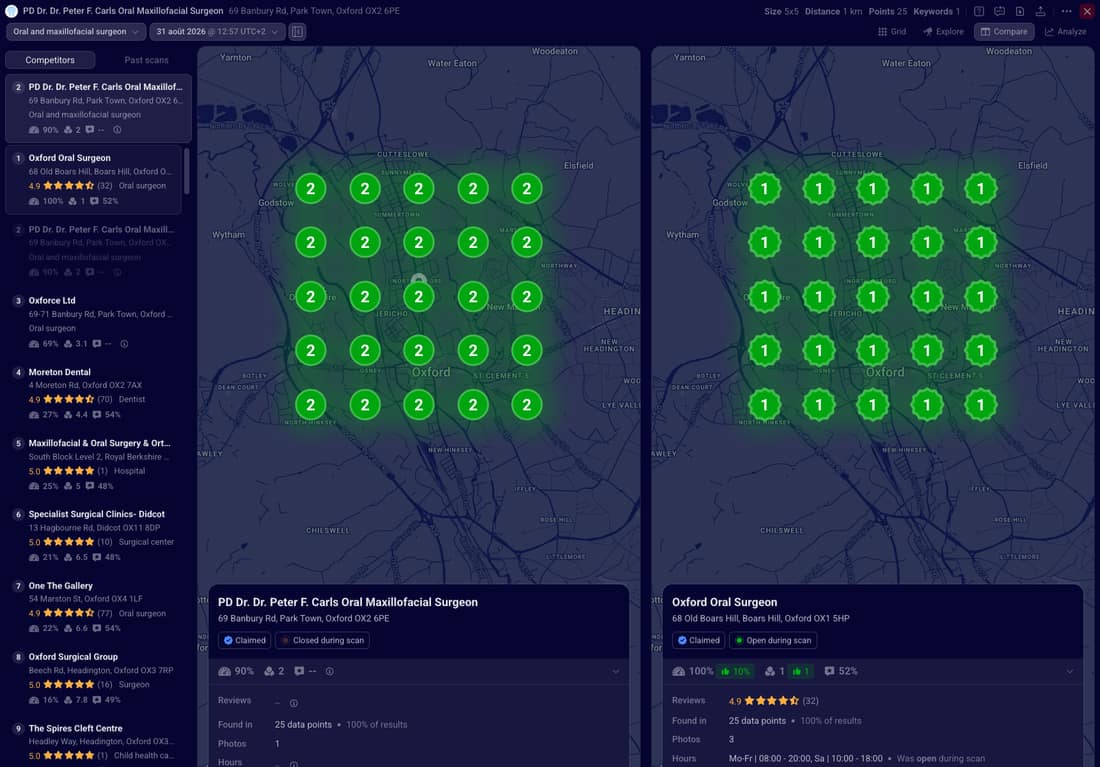
Both practices show up well around Banbury Rd in Oxford, but Oxford Oral Surgeon comes first more often, which makes your own map a real asset.
We ran the same search from the same spots around Banbury Rd in Oxford, so you can read the two maps side by side.
That means your local map is already helping you here, and the next question is your website: does it turn that strong showing into visits from new people?

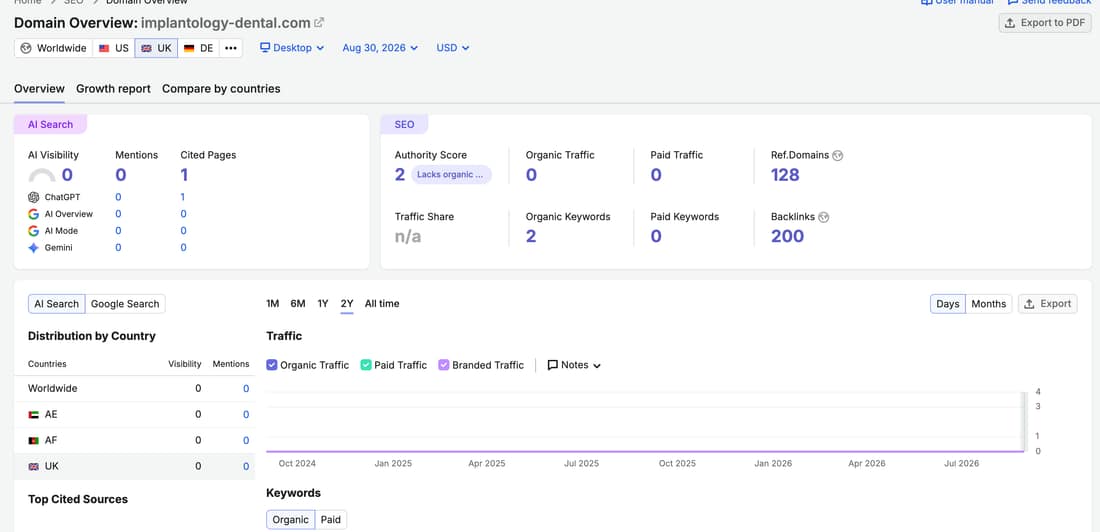
From the searches we found, people reaching your site through Google are not using your practice name. This is an estimate, based on the searches we could see.
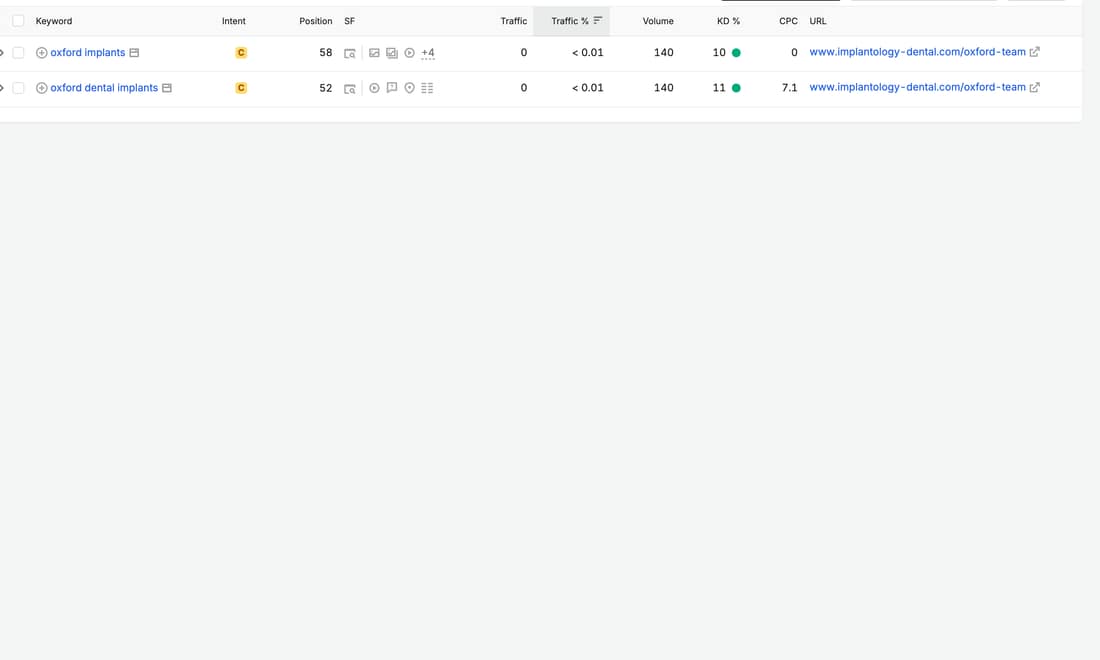
So which searches do people make when they do not know your name yet?

These are implant searches. They lead people to your team page rather than a treatment page.
The useful finding is the gap: these searches are about implants, so someone looking for an oral and maxillofacial surgeon around Banbury Rd in Oxford does not arrive this way yet. That is the priority to weigh up.

Some of what you have built is already working well and worth protecting. A few things need attention, and none of them are hard to put right.
I used to run clinics myself, so I read this the way one colleague reads it with another. None of these gaps is complicated, and each one can be handled on its own.
Patients choose before they call: from the first names on the map, from the first results on Google. My team rebuilds what decides that, your Google listing and the pages a patient lands on, and keeps it up every month. Here is what happens if you reply.
WhatsApp or a voice note. Tell me which part of this page matters most to you. I reply myself.
We agree the priorities and what Forge will deliver, in writing. It is the only real time this asks of you.
Your Google listing and the pages a new patient lands on. Fixed before anything is built on top.
Kept up month after month. You watch it in a shared table, with a regular call, and your own people kept in the loop.
Four practices, four kinds of work. Delivered, not promised.
See the projectsEvery page about implants rebuilt, down to the questions patients ask before deciding. Kept up month after month.
The page patients land on before they book, her Google advertising, and a weekly letter to the colleagues who refer to her.
Every question his patients ask, mapped, then written and linked from his own publications.
His whole site reviewed page by page, and the three-month plan, city by city.
For a given specialty. So we do not work with the practice on the second map above, and would not while working with you.
Then very little: the odd decision, and your clinical eye where it matters.
If you stop, you keep all of it. No minimum term.
Agreed in writing. Nobody honest can promise you a position on Google, and we will not.
I'm a doctor. I used to run a group of clinics, and I know this part of the job is not why anyone chooses medicine. Today my team does it for practices like yours: the research, the writing and the set-up. You come in only where clinical knowledge matters.

WhatsApp or voice note: +33 7 43 69 81 74. Tell me which part of this page you want to understand better. I reply myself. This page was made for your practice only, and it comes down 32 days after it was published.
The questions practitioners actually ask me after a page like this.